Indiana Public Colleges
Choosing an Indiana public college is not only about finding the most recognizable name or the campus with the lowest advertised tuition.
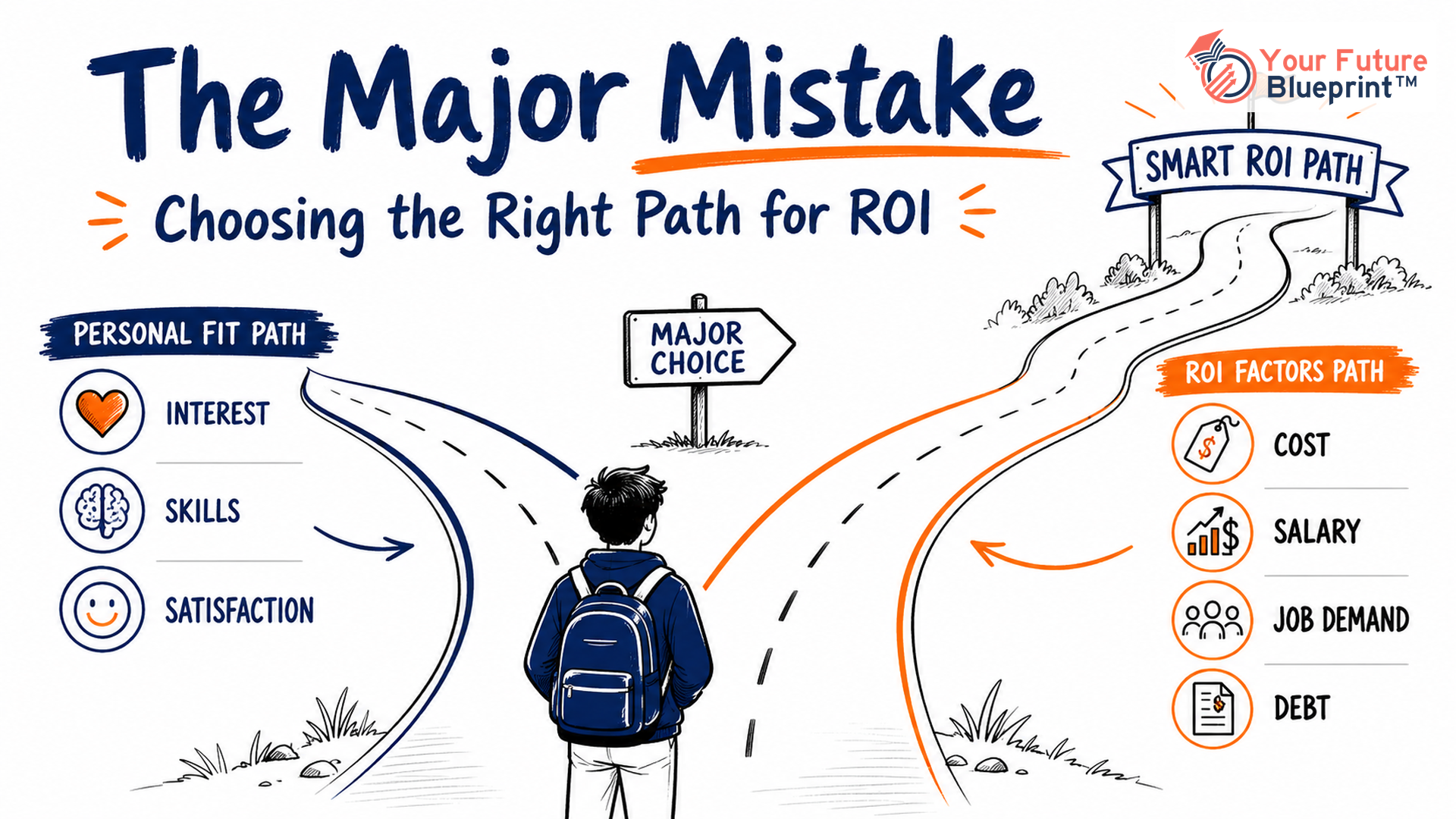
The better question is: Which option gives you the strongest combination of manageable cost, academic and personal fit, and long-term value?
Purdue University, Indiana University Bloomington, Ball State University, Indiana University Indianapolis, Indiana State University, regional campuses, Ivy Tech Community College, and other public options serve different students in different ways. The right choice depends on your program, financial aid, living arrangement, support needs, career goals, and preferred college environment.
Reviewed for: 2026–27 college cost and outcomes review
Last reviewed: July 2026 | Review type: Annual and data-sensitive
What changed in this update:
- Current 2026–27 cost examples were reviewed using official university sources.
- The article uses Indiana University Indianapolis instead of the former IUPUI name. IU Indianapolis officially began operating under its current name on July 1, 2024.
- Several fixed percentages and savings claims from the original video could not be confirmed through current official sources and are not presented as verified facts in the article.
- The original transcript remains a cleaned version of the video and may include figures that require additional verification.
Important: Tuition, fees, housing estimates, financial aid, graduation data, transfer agreements, and career outcomes can change. Confirm all time-sensitive information with the institution and official resources before making a final decision.
Quick Answer
Compare Indiana public colleges by looking at your actual net price, whether the school supports your academic and personal needs, and what students in your program experience after enrollment. Do not make the decision using tuition, rankings, or average salary alone. The strongest option is usually the one you can afford, complete successfully, and connect to a realistic next step.
Key Takeaways
- Compare net price and total cost of attendance, not tuition alone.
- Confirm that your intended major is offered and that you understand any separate program admission requirements.
- Review graduation rates, student support, internship access, debt, and earnings by program when data are available.
- Treat community college and regional campus pathways as real options, not automatic second choices.
- Ask each college for information that applies to your financial situation and intended program.
Who This Is For
Students: Use this guide to build a realistic college shortlist based on more than campus reputation.
Parents: Compare what the family may actually need to pay and how each option supports completion.
Counselors: Share the comparison questions with students who are deciding among Indiana public colleges.
The Right College Is Not Automatically the Biggest Name
A well-known university may offer extensive programs, research opportunities, alumni connections, and campus activities. A regional campus or community college may provide smaller classes, lower tuition, easier commuting, stronger local connections, or a more flexible path.
Neither type of institution is automatically right for every student.
A college may look affordable but become expensive after housing, food, transportation, books, program fees, and personal expenses are included. Another college may have a higher published cost but provide more grant aid to a particular student.
The goal is not to identify one Indiana college as the winner. The goal is to determine which option works for your situation.
Start With Your Real College Cost
Colleges normally publish several different cost figures. Understanding the difference can prevent misleading comparisons.
Sticker price is the published amount before grants and scholarships.
Cost of attendance is an estimate that may include tuition, mandatory fees, housing, food, books, supplies, transportation, and personal expenses.
Net price is the amount remaining after grants and scholarships are subtracted from the estimated cost. Loans are not discounts because they normally must be repaid.
Your final out-of-pocket cost depends on your financial aid offer, living arrangement, program fees, personal expenses, and other circumstances.
Current 2026–27 Examples
For a general Indiana-resident undergraduate at Purdue University’s West Lafayette campus, published tuition and mandatory student fees total approximately $9,992 for the 2026–27 academic year. Purdue’s estimated total cost, including housing, food, books, transportation, and miscellaneous expenses, is approximately $30,586. Certain programs charge additional differential fees.
Indiana University Bloomington lists approximately $12,142 in tuition and mandatory fees for an Indiana-resident undergraduate in 2026–27. Its estimated total cost of attendance is approximately $30,574, including housing, food, books, transportation, and personal expenses.
Indiana University Indianapolis lists approximately $10,760 in tuition and mandatory fees for a full-time Indiana-resident undergraduate. Its estimated total cost ranges from approximately $20,754 for a student living with a parent to approximately $30,286 for a student living off campus.
Ivy Tech Community College lists a full-time Indiana-resident tuition rate of $2,577.11 per semester for fall 2025 through summer 2027. This equals approximately $5,154.22 for two standard semesters, before textbook charges, program fees, living costs, transportation, and personal expenses.
These examples are not financial aid offers and should not be treated as identical comparisons. Each institution calculates and presents expenses differently, and your actual net price may be higher or lower.
Build a Four-Year Estimate
Do not stop after comparing one year.
For each college, estimate:
- Tuition and mandatory fees
- Housing and food
- Books, equipment, and supplies
- Transportation and parking
- Program or laboratory fees
- Health insurance, if required
- Personal expenses
- Expected annual grants and scholarships
- Family contribution
- Student earnings
- Expected borrowing
- Possible tuition or housing increases
- The cost of an additional semester or year
A college that costs slightly more per year but offers a clearer graduation path may cost less overall than an option where changing majors, unavailable courses, or lost transfer credits delay completion.
Use Each College’s Net Price Calculator
Every college participating in federal student aid programs is generally required to provide a net price calculator.
The calculator gives an estimate based on information such as household income, family size, residency, and academic profile. It is not a final financial aid offer, but it provides a more personalized starting point than the published sticker price.
Complete the calculator for every serious option using the same family information. Save the results so you can compare them after financial aid offers arrive.
Check Academic Fit Before Campus Vibe
A beautiful campus cannot make up for a program that does not meet your academic or career needs.
Begin with the intended major or career pathway.
Ask:
- Does the college offer the exact major or credential I need?
- Am I admitted directly to the program or only to the university?
- Is there a separate application for the major?
- Are there minimum grade-point average requirements?
- Is the program accredited when accreditation matters for employment or licensing?
- How often are required courses offered?
- Can I change majors without adding significant time?
- Are internships, clinical placements, laboratories, or field experiences included?
- What percentage of students complete this particular program?
- What happens if I am not admitted to a competitive program?
Some students are admitted to a university but must later apply separately to nursing, business, education, engineering, health sciences, or another selective program. Confirm this process before enrolling.
Compare the Environment Where You Will Actually Learn
College fit includes more than liking the campus during a tour.
Consider:
- Large, medium, or small campus
- Residential, commuter, or mixed environment
- Urban, suburban, or smaller-community setting
- Average class size in first-year courses
- Access to instructors
- Tutoring and academic coaching
- Disability and accessibility services
- Mental health and wellness support
- Career advising
- Student organizations
- Cultural and community support
- Transportation and parking
- Distance from home
- Housing availability
- Part-time work opportunities
Think honestly about the environment in which you are most likely to attend class, ask for help, build relationships, and remain engaged.
A student who thrives in a large research university may feel limited at a smaller campus. Another student may feel lost in a large lecture environment and perform better at a regional campus with smaller classes.
Neither preference is wrong.
Visit With Specific Questions
A campus tour is more useful when you investigate daily student life instead of only looking at buildings.
Try to:
- Sit in on a class when permitted.
- Visit the academic department for your intended major.
- Ask to speak with a current student.
- Tour tutoring, advising, career, and wellness offices.
- Check the walking distance between classes.
- Review housing and meal plan details.
- Ask how students find internships.
- Look at transportation and parking.
- Visit at a normal time rather than only during a large event.
Your school counselor, teachers, admissions representatives, financial aid offices, and current students can help you gather information. One person may not have every answer, so confirm important details directly with the correct office.
Measure Return on Investment Carefully
Return on investment, commonly called ROI, asks whether the time, money, and effort required for a program are reasonable compared with its possible benefits.
College ROI is not only a salary calculation.
A useful comparison considers:
- Total amount paid
- Amount borrowed
- Time required to graduate
- Likelihood of completing the program
- Licensure or certification results
- Employment outcomes
- Earnings by field of study
- Internship and work experience
- Geographic location
- Alumni and employer connections
- Ability to continue into graduate or professional education
- Personal and professional goals
A degree may have strong financial value for one student and be a poor fit for another. Outcomes can vary significantly by major, occupation, location, work experience, economic conditions, and the student’s decisions after graduation.
Look at Completion, Not Only Admission
Being accepted is only the beginning.
Review:
- First-year retention
- Four-year graduation rate
- Six-year graduation rate
- Completion rate for transfer students
- Average time to degree
- Availability of required courses
- Academic probation support
- Percentage of students who change majors
- Completion outcomes for the intended program
The Indiana Commission for Higher Education provides information on on-time completion, extended-time completion, and persistence at Indiana public institutions. The U.S. Department of Education College Scorecard also allows families to compare costs, debt, graduation rates, and post-college earnings.
Review Debt in Context
Do not compare colleges using only the average debt of students who borrowed.
Ask:
- What percentage of graduates borrowed?
- Is the figure for all students or borrowers only?
- Does it include federal loans, private loans, or both?
- Is it specific to undergraduate students?
- Is it specific to Indiana residents?
- Is it an average or a median?
- What would the estimated monthly payment be?
- How does borrowing compare with likely earnings in the intended field?
Indiana’s 2024 Reporting on Degrees analysis states that approximately half of Indiana-resident students graduating from four-year bachelor’s degree programs at public Indiana institutions had federal student loan debt. The reported middle debt level was approximately $19,832. This statewide information is useful context, but it does not predict what an individual student will borrow.
Compare Career Outcomes by Program
A university-wide salary figure may hide major differences among programs.
When available, compare:
- Employment rate
- Median earnings
- Type of job secured
- Whether employment data include students who continued their education
- Percentage working in Indiana
- Percentage working in a related field
- Internship participation
- Employer partnerships
- Graduate school placement
- Licensure examination results
- Number of graduates included in the data
Indiana’s Reporting on Degrees analysis reported median earnings of approximately $42,353 one year after graduation, $52,584 five years after graduation, and $62,674 ten years after graduation for bachelor’s degree recipients from Indiana public colleges and universities. These are statewide medians across institutions and programs, not guaranteed starting salaries for individual graduates.
Use earnings data as one part of the decision. A salary figure should not replace questions about program quality, completion, licensing, personal goals, work location, and the amount you may need to borrow.
Consider Regional Campuses
Regional campuses may offer:
- Lower tuition or living expenses
- The option to commute from home
- Smaller class sizes
- Easier access to instructors
- Local internships
- Flexible course schedules
- Familiar community support
- A pathway to a larger campus
However, confirm that the campus offers the full program you want. Some majors, concentrations, courses, laboratories, clubs, and residential experiences may be available only at selected locations.
Explore Community College and Transfer Pathways
Starting at Ivy Tech or another two-year institution can reduce tuition expenses, especially for students who can live at home. However, a transfer plan saves money only when credits apply correctly to the bachelor’s degree and the student remains on track.
Indiana’s Transfer Single Articulation Pathways, commonly called TSAPs, allow eligible students to complete an approved associate degree and transfer into a related bachelor’s degree pathway. Requirements vary by program and destination institution.
The Indiana College Core is a 30-credit block of general education coursework that transfers among Indiana public institutions. Completing the Core does not guarantee admission to a particular university or competitive major, and students should confirm how the credits apply to their intended degree.
Before choosing a transfer pathway:
- Select the intended bachelor’s degree and destination institution.
- Ask for a written degree map.
- Confirm that every course applies to the intended major.
- Review grade-point average and admission requirements.
- Check whether the major must remain the same after transfer.
- Meet regularly with both the current institution and intended transfer institution.
- Recheck the agreement before registering each semester.
- Keep copies of advising notes and degree plans.
Do not assume that every course labeled “transferable” will satisfy a specific requirement in your major.
Build a Simple College Scorecard
Rate each serious option from 1 to 5 in the following areas:
- Estimated annual net price
- Estimated four-year cost
- Expected borrowing
- Major availability
- Program admission requirements
- Course availability
- Academic support
- Campus environment
- Housing or commuting plan
- Graduation and retention outcomes
- Internship access
- Career services
- Earnings and employment information
- Transfer flexibility
- Personal comfort and support network
Then identify your three most important factors.
A student focused on engineering may prioritize program access, laboratories, internships, and accreditation. A student who plans to commute may prioritize transportation, schedule flexibility, and local employment. A student who needs stronger academic support may prioritize advising, tutoring, smaller classes, and early-alert programs.
What to Watch For
Comparing Annual and Semester Costs
Some colleges list prices by semester, while others show the full academic year. Make sure the time periods match.
Using Tuition Instead of Total Cost
Housing, food, transportation, supplies, personal expenses, and program fees can equal or exceed tuition.
Treating Loans as Financial Aid Discounts
Loans can help cover costs, but borrowed money normally must be repaid with interest.
Assuming Admission to a Major
University admission may not equal admission to nursing, business, engineering, education, health sciences, or another selective program.
Assuming Every Credit Will Transfer
A course may transfer as an elective without satisfying a requirement in the intended bachelor’s degree.
Using a School-Wide Salary to Predict Your Income
Earnings differ by program, occupation, location, experience, and economic conditions.
Ignoring Regional or Community College Options
A less expensive campus may provide an effective path, but the academic program, transfer plan, and support services still need to fit the student.
Choosing Only From a Ranking
Rankings may use factors that do not match your priorities, financial situation, or intended program.
What To Do If This Happens
The College Becomes Unaffordable After the Financial Aid Offer
- Compare the offer with the college’s earlier estimate.
- Identify grants, scholarships, work-study, federal loans, private loans, and remaining family cost separately.
- Contact the financial aid office and ask for an explanation.
- Ask whether changed family circumstances can be reviewed.
- Check whether scholarships are renewable and what requirements must be maintained.
- Avoid paying a nonrefundable deposit until you understand the expected cost.
Your Intended Major Is Not Available
- Ask whether the program has been renamed, moved to another campus, paused, or closed.
- Do not select an unrelated major only to enter the university.
- Compare another campus or institution offering the actual program.
- Ask how changing campuses later would affect credits, housing, aid, and graduation timing.
You Are Admitted to the College but Not the Program
- Ask about the requirements and timeline for applying to the major.
- Request information on the number of available spaces.
- Ask what happens if you are not admitted later.
- Compare backup majors before enrolling.
- Consider a college that offers direct admission when that is important to you.
Your Transfer Credits Do Not Apply as Expected
- Request a written transfer-credit evaluation.
- Compare the evaluation with the published agreement.
- Speak with an academic advisor or transfer specialist.
- Ask about the institution’s appeal process.
- Avoid registering for duplicate courses until the evaluation is resolved.
What To Do Next
- Choose three to five Indiana college options.
Include different types of institutions when practical, such as a large university, regional campus, and community college pathway.
- Confirm your program.
Check whether the intended major is offered at that specific campus and whether separate admission is required.
- Complete each net price calculator.
Use consistent family and financial information.
- Build a four-year estimate.
Include living expenses, transportation, program fees, aid renewal requirements, and possible additional semesters.
- Review outcomes.
Use the Indiana Commission for Higher Education, College Scorecard, and institutional data to compare completion, debt, and career outcomes.
- Ask for help.
Review the comparison with a school counselor, trusted adult, college financial aid office, admissions representative, academic department, or career advisor.
Official / Trusted Links
U.S. Department of Education College Scorecard
Compare college costs, graduation rates, student debt, fields of study, and post-college earnings.
Indiana Commission for Higher Education College Completion Data
Review persistence and on-time and extended-time completion data for Indiana public institutions.
Indiana Commission for Higher Education Credit Transfer
Review the Indiana College Core and statewide credit-transfer information.
TransferIN
Review the Core Transfer Library, Indiana College Core, and Transfer Single Articulation Pathways.
Indiana University Cost Estimator
Estimate tuition and mandatory fees by campus, program, residency, and student type.
Purdue University 2026–27 Undergraduate Tuition and Fees
Review current tuition, housing, estimated expenses, and program-specific rates.
Build a Better College Comparison
Before choosing a college based only on tuition or reputation, learn how to compare total cost, time, debt, and career outcomes in ROI: Real Costs, Real Careers.
Parents can use the Parent & Caregiver Track to work through affordability, college choices, and planning decisions with their student.
To understand FAFSA, grants, scholarships, and other financial aid before comparing offers, explore the Financial Aid Track.
Indiana students should also understand how the Indiana College Core may affect college credits, time to degree, and potential costs.
For additional Indiana-specific guidance, visit the Indiana Graduation, College & Career Planning Track.
Best Next Step
Choose three colleges and complete each institution’s net price calculator using the same family information. Bring the estimates, your intended major, and your questions to a school counselor or trusted adult before narrowing your list.
Your school counselors, teachers, financial aid offices, college representatives, and trusted mentors are strong places to start. Your Future Blueprint can provide an additional tool for organizing the information and asking clearer questions.
Ready for the next step? Explore the recommended track for step-by-step guidance:
Counselor Share Note
This article is designed to be shared with students and families as a general educational comparison resource. Students should confirm institution-specific information with school counselors, financial aid offices, admissions representatives, academic departments, transfer specialists, and official state or federal resources.
Sources & References
Last Reviewed
July 18, 2026
Review cycle: Annual college cost, transfer, completion, and career outcomes review
Disclaimer
This content is for general educational purposes only and does not constitute financial, legal, tax, academic advising, career counseling, or professional advice. College costs, financial aid, admissions requirements, transfer agreements, program availability, graduation outcomes, and career data can change.
Students and families should consult with school counselors, financial aid offices, admissions representatives, academic departments, transfer specialists, official agencies, and trusted advisors before making final decisions.
No personal student information is collected or stored when accessing free content through verified K–12 school platforms. Any optional tools that collect user-provided information should be reviewed with the platform’s Privacy Policy and Terms of Use.
View Transcript

This transcript reflects the original video content. Some details and numerical claims may have changed or could not be independently confirmed during the July 2026 review. Please use the reviewed article and official links above for current guidance.
Your Indiana College Journey
If you are an Indiana high school student, your in-state college choice could help determine whether you graduate with no debt or with significant student loan debt.
Indiana offers several public university options. But how do you choose among Purdue, Indiana University, Ball State, Indiana University Indianapolis, Indiana State, and regional campuses?
It is about finding the strongest combination of cost, fit, and return on investment, or ROI, for you.
Comparing Cost: Beyond the Sticker Price
Indiana public universities are generally more affordable for Indiana residents than attending an out-of-state institution. However, tuition, fees, and living expenses can change.
The original video notes examples of tuition increases at Purdue and Ball State and an estimated net-price range among Indiana public campuses.
Do not forget expenses beyond tuition, room, and board. Transportation, supplies, program fees, personal expenses, and other living costs can affect what you actually pay.
Comparing Fit: Beyond the Brochure
Fit is about finding a college environment that matches your needs.
Consider degree options, campus size and culture, location, and access to academic and mental health support. Your ideal environment should give you the resources and support you need to continue making progress.
Comparing ROI: Your Future Value
Return on investment is not only about what you pay. It is also about what you gain.
For specific Indiana public universities, compare graduation rates, career outcomes, starting salaries, and employment information connected to your major.
You should also consider the alumni network. Active alumni may provide connections for employment, internships, and mentorship.
Together, these factors can help you understand the potential value of a degree in the job market.
Key Tools for Your Comparison
Beyond four-year universities, Indiana has a statewide community college system led by Ivy Tech Community College, along with regional campuses and transfer pathways.
Starting at a community college and transferring to a four-year institution may lower tuition expenses. However, students need to confirm that their courses will transfer and apply to their intended bachelor’s degree.
Use college websites, net price calculators, the Indiana Commission for Higher Education website, College Scorecard, and official transfer resources.
Ask an admissions office whether you can speak with a current student. Your school counselor can also help you organize your questions and evaluate the information.
Your Smart Indiana Choice
Investing time to compare Indiana public colleges—including universities, regional campuses, and community college pathways—can help you make a more informed decision.
Compare cost, fit, and return on investment before enrolling.
The best choice is not the same for every student. Look for an option that supports your education, financial situation, personal needs, and career direction.
Disclaimer
This content is for educational purposes only and does not constitute financial, legal, or professional advice.
Students and families should consult with school counselors, financial aid offices, college representatives, academic advisors, or trusted advisors before making final decisions.