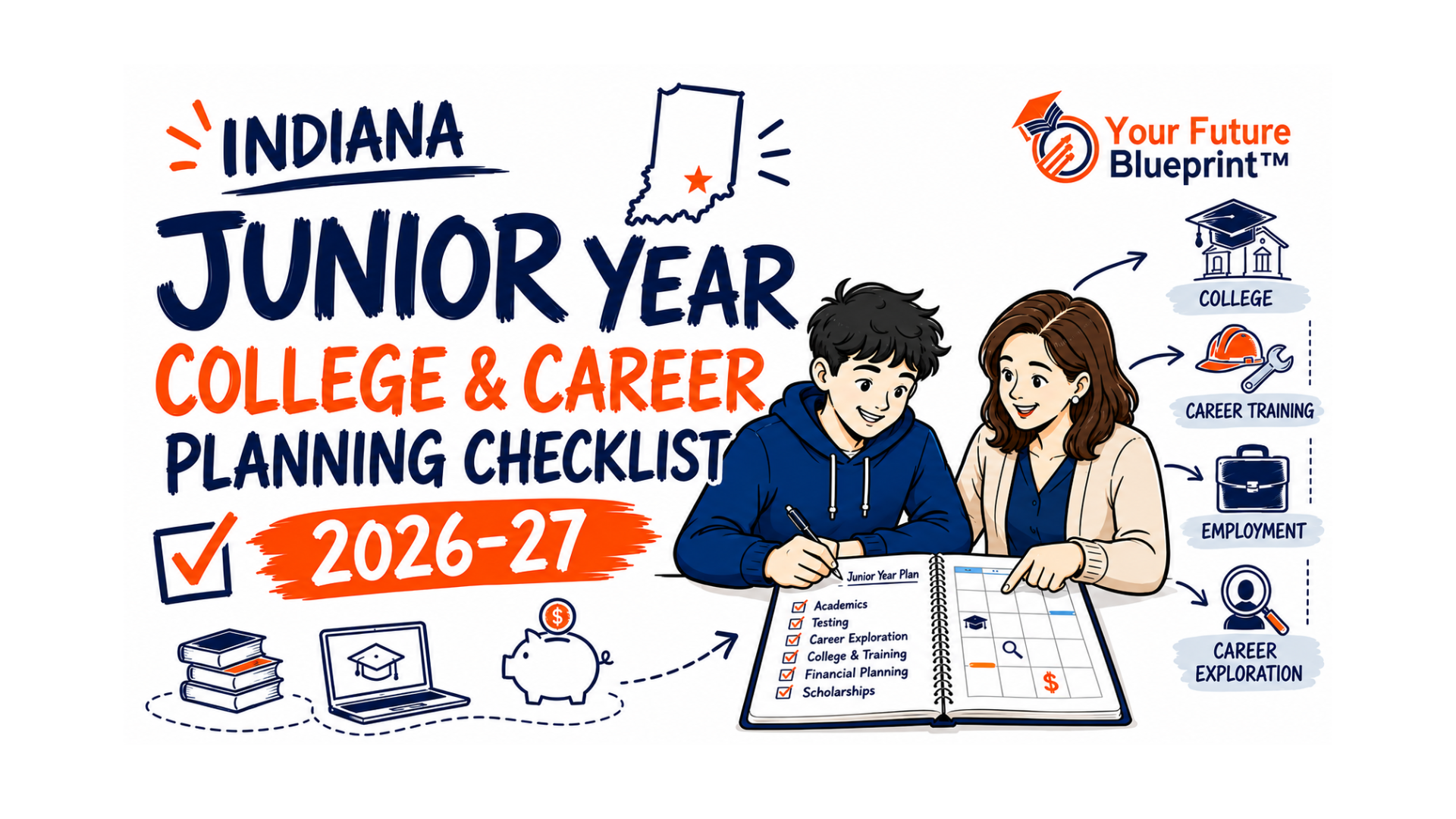
Your Junior Year Checklist for Indiana College & Career Planning
Junior year is often called the most important year of high school—and for good reason. The decisions, habits, and planning steps you take now can influence college admissions, scholarship opportunities, career exploration, and your transition into senior year.
The good news is that you do not need to figure everything out at once. A step-by-step approach can help you stay organized and make informed decisions about your future.
Reviewed for: 2026 Indiana College & Career Planning Cycle
Last reviewed: June 2026 | Review type: Annual
What changed in this update:
- No major changes identified during this review.
- Links and official resources were reviewed for accuracy.
- Time-sensitive details should still be verified before major decisions.
Important: College admissions policies, scholarship requirements, testing policies, and financial aid programs can change. Always verify important details using official sources.
Quick Answer
Junior year is one of the most important times for Indiana students to prepare for life after high school. By focusing on academics, career exploration, testing, financial aid planning, and future goals, students can enter senior year with a clearer plan and more options.
Key Takeaways
- Strong grades and challenging coursework remain important.
- SAT and ACT scores may still help with admissions and scholarships.
- Career exploration should begin before senior year.
- Meaningful involvement and leadership often matter more than joining many activities.
- Early planning for financial aid and college costs can reduce stress later.
Who This Is For
Students: Learn how to stay organized and prepare for college, careers, training programs, or other postsecondary pathways.
Parents: Understand key conversations and planning milestones before senior year.
Counselors: Share a practical checklist students can use throughout junior year.
Why Junior Year Matters
Junior year serves as a bridge between exploration and decision-making.
Students begin narrowing interests, researching colleges and careers, building stronger academic records, and preparing for applications that may begin during senior year.
While every student's path is different, this year provides an opportunity to build momentum and avoid last-minute decisions later.
Strengthen Your Academic Foundation
Colleges, scholarship committees, training programs, and employers often look for evidence of growth and commitment.
Focus on:
- Maintaining strong grades
- Improving in challenging subjects
- Taking rigorous coursework when appropriate
- Developing strong study habits
- Seeking help early when needed
Academic improvement matters. Students do not need a perfect transcript to demonstrate effort and growth.
Prepare for College Entrance Exams
Although many colleges now offer test-optional admissions policies, strong SAT or ACT scores can still provide benefits.
Students should consider:
- Taking or retaking the PSAT
- Preparing for the SAT or ACT
- Researching scholarship requirements
- Understanding individual college testing policies
Some scholarships and honors programs may still consider standardized test scores as part of their selection process.
Dual Credit and Advanced Placement Opportunities
Junior year can also be a good time to explore:
- Dual credit courses
- Advanced Placement (AP) courses
- Industry certifications
- Early college opportunities
These options may help students gain experience with college-level work while still in high school.
Define Your Future Direction
Many students feel pressure to have everything figured out by junior year.
The reality is that exploration is part of the process.
Ask questions such as:
- What subjects interest me most?
- What type of work environment appeals to me?
- Do I prefer hands-on learning or classroom-based learning?
- What training or education might my goals require?
Junior year is about learning more about your options—not making a permanent decision.
Explore Indiana Career Opportunities
Indiana offers opportunities across many industries, including:
- Healthcare
- Advanced manufacturing
- Skilled trades
- Information technology
- Business and finance
- Logistics and transportation
Career exploration tools can help students understand:
- Job growth trends
- Salary ranges
- Required education levels
- Local workforce opportunities
Exploring careers early can help students make more informed education and training decisions.
Build a Strong Student Profile
Colleges and scholarship reviewers often look beyond grades alone.
Meaningful involvement can demonstrate initiative, responsibility, and personal growth.
Consider:
- Participating in activities you genuinely enjoy
- Taking leadership opportunities
- Volunteering in your community
- Developing specialized skills
- Pursuing long-term commitments
A few activities with meaningful impact may be more valuable than a long list of short-term involvement.
Prepare for Recommendation Letters
Strong recommendation letters usually come from relationships built over time.
Students can prepare by:
- Participating actively in class
- Communicating respectfully with teachers
- Demonstrating responsibility
- Seeking feedback when needed
When recommendation season arrives, asking early gives teachers and counselors more time to provide thoughtful support.
Plan for Financial Aid Before Senior Year
Financial planning should begin before senior year whenever possible.
Families may want to learn about:
- Federal financial aid
- Indiana state aid programs
- Scholarship opportunities
- College cost estimates
- Eligibility requirements for state programs
Students participating in the 21st Century Scholars Program should review their Scholar Success Program requirements and ensure they remain on track.
Have Honest Family Conversations
Junior year is an excellent time to discuss:
- Postsecondary goals
- Career interests
- College preferences
- Budget expectations
- Financial aid planning
These conversations can help students build realistic plans and avoid surprises during application season.
Conquer Your College List
Students considering college should begin building a preliminary college list.
A balanced list often includes:
Reach Schools
Schools where admission may be more competitive.
Target Schools
Schools that appear to be a strong academic and personal fit.
Safety Schools
Schools where admission is more likely based on current academic credentials.
The purpose of a balanced list is not to predict outcomes but to create options.
Your Junior Year Action Plan
Step 1: Focus on strong grades and academic growth.
Step 2: Research careers and postsecondary pathways.
Step 3: Explore financial aid and scholarship opportunities.
Step 4: Build meaningful involvement and leadership experience.
Step 5: Create a preliminary college and career plan before senior year.
Official / Trusted Links
Indiana Career Explorer
Learn about careers and use career assessments
Learn More Indiana
Learn about Indiana education, college, and career options
Indiana Commission for Higher Education
Learn about Indiana financial aid, scholarships, and higher education planning
College Board SAT Information
Learn about the SAT and use official test preparation resources
ACT Student Information
Learn about the ACT and use official student testing resources
Federal Student Aid
Learn about federal financial aid and use FAFSA resources
Related Your Future Blueprint Resources
Related training track: Understanding the 21st Century Scholars Program
What To Do Next
Choose one area from this checklist that needs attention right now.
Whether it is academics, career exploration, testing, financial aid planning, or college research, taking one practical step this week can help build momentum for senior year.
Best Next Step
Schedule a conversation with your school counselor before the end of junior year. Review your academic progress, discuss career interests, identify potential college or training pathways, and create a simple action plan for senior year.
Ready for the next step? Explore the recommended track for step-by-step guidance:
Counselor Share Note
Counselors may share this guide with students and families as a planning resource. Because admissions policies, financial aid programs, scholarship opportunities, and state requirements can change, families should verify important details through official sources and local school guidance offices.
Sources & References
Last Reviewed
June 2026
Disclaimer
This guide is provided for educational purposes only. It should not replace advice from school counselors, financial aid professionals, college representatives, or other qualified advisors. Students and families should confirm all time-sensitive information through official sources before making decisions.
View Transcript

Your Junior Year Checklist: Indiana College & Career Planning
Junior year is often called the most important year of high school. It is your launchpad for college and career planning. There is a lot to do, but taking it step by step makes the process manageable.
Maintain strong grades throughout your junior year. Colleges review your academic performance from ninth through eleventh grade, and continued growth matters.
Prepare for standardized testing. Consider taking or retaking the PSAT and plan for the SAT or ACT. While many colleges are test-optional, strong scores may help with admissions and scholarship opportunities.
Explore Dual Credit and Advanced Placement opportunities when available. These courses may provide college-level experience while you are still in high school.
Research colleges and career pathways. Explore Indiana public and private colleges and learn about career opportunities that match your interests.
Use tools such as Indiana Career Explorer and Hoosier Hot 50 Jobs to learn about workforce demand, salaries, and future opportunities.
Schedule campus visits whenever possible. Visiting a campus can help you better understand whether a college feels like a good fit.
Build depth in your extracurricular activities. Focus on meaningful involvement and seek opportunities to take initiative and develop leadership skills.
Strengthen relationships with teachers and counselors. These connections can help when it is time to request recommendation letters.
Begin planning for financial aid and scholarships. Review Indiana financial aid opportunities, scholarship programs, and any requirements connected to programs such as 21st Century Scholars.
Talk openly with your family about educational goals, college costs, and future plans.
Create a preliminary college list that includes reach, target, and safety schools. A balanced list can help you prepare for the application process during senior year.
As junior year concludes, begin preparing for senior year by reviewing your schedule, organizing application materials, and drafting college essays when appropriate.
Junior year can feel overwhelming, but breaking the process into manageable steps can help you gain confidence and stay focused. By taking action now, you are building a foundation for future success.
Your counselors, teachers, and trusted adults are valuable resources throughout this process.