Your Future Blueprint
ABOUT
FREE GUIDANCEOpen dropdown
Tracks OverviewFreshman TrackSophomore TrackJunior TrackSenior TrackParents TrackFinancial Aid Indiana TrackAdult Education TrackSkilled Trades Track
FAFSA HELP
FOR EDUCATORSOpen dropdown
High School CounselorsAdult Educators & Career NavigatorsIndiana Educator ResourcesAll Student & Learner Tracks
RESOURCES
Arrow
Blueprint Blogs
Find Your Free Track

Free access — no account or credit card.

ABOUT
FREE GUIDANCE
Arrow
Tracks OverviewFreshman TrackSophomore TrackJunior TrackSenior TrackParents TrackFinancial AidIndiana TrackAdult Education TrackSkilled Trades Track
FAFSA HELP
FOR EDUCATORSOpen dropdown
High School CounselorsAdult Educators & Career NavigatorsIndiana Educator ResourcesAll Student & Learner Tracks
RESOURCES
Arrow
BLUEPRINT BLOG
Find Your Free Track

Free access — no account or credit card.

Home
Blogs

Junior Year College & Career Checklist | Indiana

Junior year is one of the most important years of high school. Learn how Indiana students can strengthen academics, explore careers, prepare for college admissions, plan for financial aid, and build a smart roadmap for senior year.

Authors:-
Forrest Gaston
June 30, 2026
(
High School Planning
)
Copied!
Share

In This Guide

  • Why Junior Year Matters
  • Academic Preparation
  • SAT and ACT Planning
  • Career Exploration
  • Leadership and Activities
  • Financial Aid Planning
  • College List Building
  • Senior Year Preparation

Indiana Junior Year College & Career Planning Checklist

Junior year is an important time to make decisions about college, careers, testing, financial aid, and life after high school. Use this Indiana junior year checklist to stay organized, explore your options, and prepare for senior year.

In This Guide

  • Build your college and career plan
  • Review your classes and academic progress
  • Explore careers and Indiana opportunities
  • Build and refine your college list
  • Plan for the SAT or ACT
  • Start researching college costs and financial aid
  • Look for scholarships
  • Prepare for senior year
  • Make a summer plan

Start With Your Goals

Before making a college list, think about what you want your next step after high school to look like.

Ask yourself:

  • What subjects or activities do I enjoy?
  • What careers interest me?
  • Do I want to attend a four-year college, community college, trade school, apprenticeship, or another training program?
  • Where would I like to live after high school?
  • What kind of work environment sounds interesting to me?
  • What skills do I want to develop?

You don't need to have your entire future figured out. Junior year is a good time to explore different possibilities and begin narrowing your options.

Review Your Classes and Academic Progress

Your junior-year courses can be important for college admission and future career opportunities.

Check that you are:

  • Taking the courses you need for graduation
  • Meeting admission requirements for colleges you're considering
  • Challenging yourself appropriately
  • Keeping your grades on track
  • Asking your counselor about dual-credit, AP, or other advanced opportunities
  • Making up any missing credits or required courses

If you're unsure whether your schedule supports your goals, talk with your school counselor before making changes.

Explore Careers

Junior year is a great time to connect your interests and strengths to possible careers.

Consider:

  • Taking a career interest or skills assessment
  • Researching careers that interest you
  • Talking with people who work in those fields
  • Job shadowing or completing an internship
  • Exploring career and technical education programs
  • Researching Indiana career pathways
  • Looking at education or training requirements for careers you are considering

Try to learn what people actually do in a career—not just the job title.

Build Your College List

Start creating a list of colleges and programs that fit your academic, career, personal, and financial goals.

For each school, look at:

  • Programs and majors
  • Admission requirements
  • Location
  • Campus environment
  • Graduation rates
  • Career outcomes
  • Housing and transportation
  • Total estimated cost
  • Scholarships and financial aid
  • Internship and career opportunities

Aim for a balanced list that includes schools with different admission requirements and cost levels.

Plan for the SAT or ACT

If you plan to take a college entrance exam, junior year is a good time to understand your options and create a testing plan.

Check:

  • Whether your colleges require or recommend test scores
  • Available SAT or ACT dates
  • Registration deadlines
  • Your current practice-test performance
  • Free or low-cost test preparation options
  • Whether you may qualify for testing accommodations

Keep a record of your test dates, scores, and registration information.

Start the College Cost Conversation

Don't wait until senior year to talk about how college will be paid for.

Ask your family:

  • What can we realistically afford?
  • How much might my family contribute?
  • Are there savings available for college?
  • Will I be expected to contribute?
  • Should I plan to apply for scholarships?
  • Are student loans something we should discuss?
  • Are there colleges or programs that would be a better financial fit?

A general understanding of your family's budget can help you build a more realistic college list.

Learn About Financial Aid

Start learning how financial aid works before senior year.

Research:

  • FAFSA
  • Federal grants
  • State and institutional aid
  • Scholarships
  • Work-study opportunities
  • Student loans
  • College-specific financial aid

Keep in mind that financial aid rules and deadlines can change. When you are ready to apply, use current information from official financial aid sources and the colleges you are considering.

Start Looking for Scholarships

You don't have to wait until senior year to learn about scholarship opportunities.

Create a simple scholarship tracker with:

  • Scholarship name
  • Eligibility requirements
  • Amount
  • Application deadline
  • Required materials
  • Application status
  • Award status

Look for scholarships offered by colleges, community organizations, employers, foundations, and other legitimate organizations.

Tip: Never pay someone simply because they promise to guarantee a scholarship.

Visit or Research Colleges

If possible, visit colleges during junior year or over the summer.

During a visit, pay attention to:

  • Campus environment
  • Class sizes
  • Housing
  • Student support
  • Academic programs
  • Transportation
  • Career services
  • Overall fit

If you cannot visit in person, explore virtual tours, college websites, student resources, and information sessions.

‍

Focus on Progress, Not Perfection

Use this Indiana junior year checklist to plan for college, careers, testing, financial aid, scholarships, and senior year.

Organize Your College Planning

Create one place to keep your important information.

You may want to track:

  • Colleges you're considering
  • Admission requirements
  • Application deadlines
  • Test dates and scores
  • Scholarship opportunities
  • Financial aid information
  • Campus visits
  • Questions for counselors
  • Important documents

A simple spreadsheet, notebook, or digital folder can make senior year much easier.

Make a Summer Plan

The summer before senior year can be a valuable time to prepare.

Consider:

  • Visiting colleges
  • Completing a job shadow or internship
  • Working and saving money
  • Volunteering
  • Exploring a career interest
  • Preparing for the SAT or ACT
  • Researching scholarships
  • Organizing your college list
  • Reviewing application requirements
  • Creating a list of people who may write recommendations

Choose activities that help you learn, grow, or prepare for your next step.

Your Junior Year Checklist

Academics

  • Review your graduation requirements
  • Check your junior-year schedule
  • Review college admission requirements
  • Meet with your school counselor
  • Keep your grades on track
  • Explore advanced or dual-credit opportunities

Career Planning

  • Complete a career assessment
  • Research careers that interest you
  • Explore Indiana career pathways
  • Consider job shadowing or an internship
  • Research education and training requirements

College Planning

  • Start or update your college list
  • Research majors and programs
  • Compare admission requirements
  • Research graduation and career outcomes
  • Visit or virtually explore colleges
  • Compare total college costs

Testing

  • Research SAT and ACT requirements
  • Choose a testing plan
  • Register for an exam if appropriate
  • Prepare for your test
  • Keep track of your scores

Financial Planning

  • Talk with your family about college costs
  • Estimate what your family may contribute
  • Research scholarships
  • Learn about FAFSA and financial aid
  • Compare net prices
  • Learn about responsible borrowing

Senior-Year Preparation

  • Create a preliminary college list
  • Research application requirements
  • Identify potential recommendation writers
  • Organize important documents
  • Create a senior-year deadline calendar
  • Make a summer plan

What Should Juniors Focus on Most?

You don't need to complete everything at once. Focus first on academics, career exploration, college research, testing, and understanding college costs.

The goal of junior year is to move from simply thinking about your future to making informed choices about your options.

‍

Official / Trusted Links

Indiana Career Explorer
‍
Learn about careers and use career assessments

Learn More Indiana
Learn about Indiana education, college, and career options

Indiana Commission for Higher Education
Learn about Indiana financial aid, scholarships, and higher education planning

College Board SAT Information
Learn about the SAT and use official test preparation resources

ACT Student Information
Learn about the ACT and use official student testing resources

Federal Student Aid
Learn about federal financial aid and use FAFSA resources

Related Your Future Blueprint Resources

Related training track: Understanding the 21st Century Scholars Program

What To Do Next

Choose one area from this checklist that needs attention right now.

Whether it is academics, career exploration, testing, financial aid planning, or college research, taking one practical step this week can help build momentum for senior year.

Best Next Step

You don't need to have your entire future decided during junior year. Start with one step: meet with your counselor, research a career, add a college to your list, or have a conversation about college costs.

Small steps now can make your senior year more organized and help you make more confident decisions about life after high school.

Ready for the next step? Explore the recommended track for step-by-step guidance:

Best Next Step ▼
Financial Aid Track Freshman Track Senior Track Junior Track Sophomore Track College Money Blueprint Track Parent Track Indiana Track

Counselor Share Note

Counselors may share this guide with students and families as a planning resource. Because admissions policies, financial aid programs, scholarship opportunities, and state requirements can change, families should verify important details through official sources and local school guidance offices.

Sources & References

  • Indiana Career Explorer
    Reviewed: June 2026‍
  • Learn More Indiana
    Reviewed: June 2026‍
  • Indiana Commission for Higher Education
    Reviewed: June 2026‍
  • College Board SAT Suite
    Reviewed: June 2026‍
  • ACT Student Resources
    Reviewed: June 2026‍
  • Federal Student Aid
    Reviewed: June 2026

Last Reviewed

June 2026

Disclaimer

This guide is provided for educational purposes only. It should not replace advice from school counselors, financial aid professionals, college representatives, or other qualified advisors. Students and families should confirm all time-sensitive information through official sources before making decisions.

View Transcript

Your Junior Year Checklist: Indiana College & Career Planning

Junior year is often called the most important year of high school. It is your launchpad for college and career planning. There is a lot to do, but taking it step by step makes the process manageable.

Maintain strong grades throughout your junior year. Colleges review your academic performance from ninth through eleventh grade, and continued growth matters.

Prepare for standardized testing. Consider taking or retaking the PSAT and plan for the SAT or ACT. While many colleges are test-optional, strong scores may help with admissions and scholarship opportunities.

Explore Dual Credit and Advanced Placement opportunities when available. These courses may provide college-level experience while you are still in high school.

Research colleges and career pathways. Explore Indiana public and private colleges and learn about career opportunities that match your interests.

Use tools such as Indiana Career Explorer and Hoosier Hot 50 Jobs to learn about workforce demand, salaries, and future opportunities.

Schedule campus visits whenever possible. Visiting a campus can help you better understand whether a college feels like a good fit.

Build depth in your extracurricular activities. Focus on meaningful involvement and seek opportunities to take initiative and develop leadership skills.

Strengthen relationships with teachers and counselors. These connections can help when it is time to request recommendation letters.

Begin planning for financial aid and scholarships. Review Indiana financial aid opportunities, scholarship programs, and any requirements connected to programs such as 21st Century Scholars.

Talk openly with your family about educational goals, college costs, and future plans.

Create a preliminary college list that includes reach, target, and safety schools. A balanced list can help you prepare for the application process during senior year.

As junior year concludes, begin preparing for senior year by reviewing your schedule, organizing application materials, and drafting college essays when appropriate.

Junior year can feel overwhelming, but breaking the process into manageable steps can help you gain confidence and stay focused. By taking action now, you are building a foundation for future success.

Your counselors, teachers, and trusted adults are valuable resources throughout this process.

Editorial Standards

Every guide on YourFutureBlueprint undergoes a rigorous review process. We only cite primary data sources and local government reports.

Learn about our process

Stay Updated

Get weekly insights delivered to your inbox

Thank you! Your submission has been received!
Oops! Something went wrong while submitting the form.

FAQs

Why is junior year important for college and career planning?

Junior year gives students time to strengthen their grades, explore careers, research colleges and training programs, prepare for applications, and understand financial aid options before senior-year deadlines arrive.

Should Indiana high school students take the SAT or ACT?

It depends on the colleges, scholarships, and programs a student is considering. Many colleges have test-optional policies, but SAT or ACT scores may still be useful for certain admissions, scholarships, or honors programs. Students should check each college's current requirements.

What should students do during junior year to explore careers?

Students can research careers, talk with counselors and professionals, participate in CTE programs, explore internships or job-shadowing opportunities, and compare education requirements, salaries, and job outlooks for careers that interest them.

Should juniors consider AP, dual-credit, or industry certification courses?

These opportunities can help students experience college-level or career-focused learning while still in high school. Depending on the program and college, dual credit or AP coursework may also provide academic benefits. Students should confirm requirements and transfer policies before enrolling.

What should parents and students do before senior year?

Families should review graduation requirements, research colleges and career pathways, discuss testing plans, begin scholarship research, estimate college costs, and create a list of important deadlines. Completing these steps during junior year can make senior year more manageable.

Related Blogs

View All Resources
Indiana student, parent, and counselor comparing dual credit and AP course options during high school planning.
High School Planning

Indiana Dual Credit vs. AP: Which Is Better for Your Student?

Dual credit and Advanced Placement (AP) both let Indiana students take college-level courses in high school, but they differ in how credit is earned. This guide briefly compares the two, including credit transfer, transcripts, AP scores, and key factors families should check before enrolling.

Date:
August 18, 2026
Indiana high school senior reviewing a college application and graduation checklist with a counselor.
High School Planning

Indiana Senior Year College & Graduation Checklist 2026–27

A practical 2026–27 guide to help Indiana seniors track graduation requirements, college applications, FAFSA and scholarship tasks, financial aid offers, and final enrollment steps.

Date:
August 13, 2026
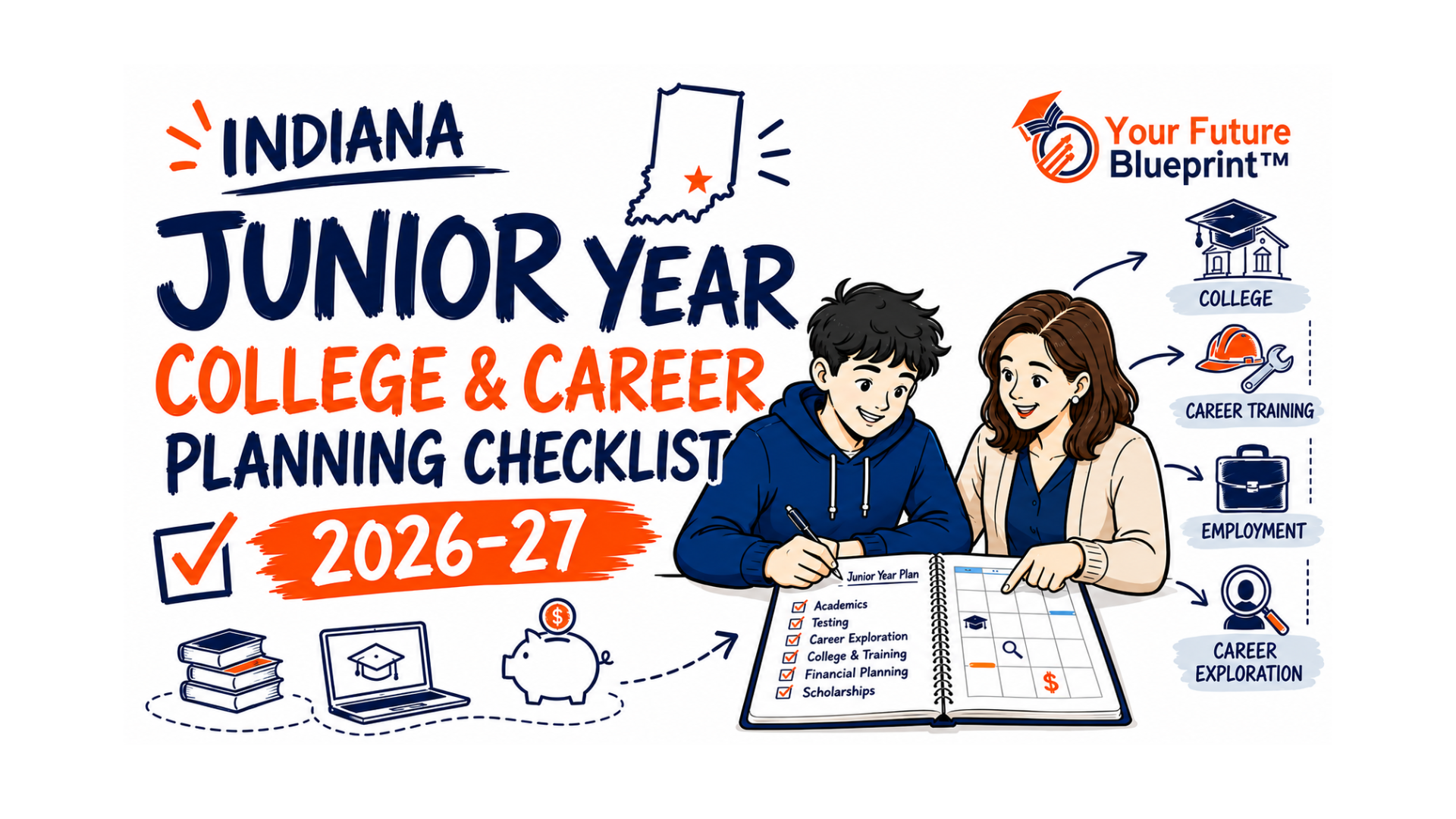
Indiana high school junior reviewing a 2026–27 college and career planning checklist with an adult, showing academics, testing, career exploration, and financial planning.
High School Planning

Indiana Junior Year College & Career Checklist 2026–27

A practical 2026–27 guide for Indiana high school juniors covering graduation progress, testing, college and career exploration, financial planning, and key steps to prepare for senior year.

Date:
August 11, 2026
Two young women collaborating at a laptop in a tutoring or collaborative learning sessionThis image shows a young person with curly hair wearing a white cardigan, writing or studying in a notebook at a desk in what appears to be a library with bookshelves visible in the background. The photo is tilted at an angle against a turquoise background, creating a modern, dynamic composition.

Build Your Next Step With a Clear Plan

Explore Student Tracks

Free access — no account or credit card.

Explore Financial Aid

Free access — no account or credit card.

Your Future Blueprint

Your future starts with clarity. We’re here to help you move forward, one smart step at a time.

Quick Links
About UsContact UsPrivacy PolicyTerms of UseAccessibility Statement
Address
CloudMadeEz LLC
‍
5625 N German Church Road, Suite 2222
Indianapolis, IN 46235
Contact
888-528-0050support@yourfutureblueprint.com

No account is needed to watch. Create an optional account only if you want to save progress. We do not sell personal information.

© 2026 Your Future Blueprint™