How to Talk to Your School Counselor
Your school counselor can help you understand which Indiana graduation requirements apply to you, review your course progress, and explore college, career, technical education, military, apprenticeship, and other options after high school.
A productive meeting starts with a clear concern, a few written questions, and your current school records.
Quick Answer
Talk with your school counselor before finalizing classes, changing your graduation plan, or making a decision that could affect graduation.
Bring your expected graduation year, transcript or progress report, planned courses, and three to five questions. Ask your counselor to confirm which diploma system applies to you, what you have completed, what remains, and what you should do next.
Key Takeaways
- Ask which Indiana diploma requirements apply to your graduating class and school.
- Review your graduation progress at least once each school year.
- Bring specific questions rather than asking only, “Am I on track?”
- Speak up early when a grade, course, schedule, attendance issue, or personal situation may affect your progress.
- Leave the meeting with written next steps, deadlines, and contact information.
Review and update information
Reviewed for: 2026–27 Indiana graduation planning
Last reviewed: July 2026 | Review type: Policy-sensitive
What changed in this update:
- Indiana is transitioning between its current diploma requirements and the new Indiana Diploma.
- The new Indiana Diploma becomes effective statewide beginning with the class of 2029, although schools may choose to use the new requirements earlier.
- Students should ask which diploma requirements apply to their graduating class and whether their school has adopted the new diploma early.
- The transcript remains a cleaned version of the original video and may not reflect every later policy update.
Indiana’s current diploma system includes General, Core 40, Core 40 with Academic Honors, Core 40 with Technical Honors, and the Alternate Diploma. Graduation Pathways are part of the current requirements beginning with the class of 2023.
Indiana’s current graduation requirements are scheduled to sunset on October 1, 2028. The new Indiana Diploma becomes effective for the class of 2029, although schools have been allowed to opt in earlier.
Important: Graduation rules, approved courses, local requirements, assessment policies, pathway options, and school procedures can change. Confirm your individual plan with your school counselor and the official Indiana resources listed below.
Who This Is For
Students: Learn how to prepare for counselor meetings and ask stronger questions about graduation.
Parents and support adults: Understand what students may need to confirm with their school.
Counselors: Share this article as a general meeting-preparation resource for students and families.
Your counselor is part of your planning team
A school counselor can help you see how different parts of high school planning fit together.
Depending on your school and situation, your counselor may help with:
- Course selection and schedule planning
- Diploma and graduation requirement reviews
- Graduation Pathways or readiness requirements
- College applications and transcript requests
- Career and technical education programs
- Dual credit and advanced coursework
- Financial aid and scholarship resources
- Career, military, apprenticeship, or workforce exploration
- Academic concerns and personal support
- Referrals to other school staff or community resources
Your counselor may not personally manage every program or have an immediate answer to every question. However, they can often explain the school’s process or connect you with the correct teacher, administrator, college representative, career center, financial aid office, or support professional.
Understand your Indiana graduation plan
Your graduation plan is more than a list of classes. It should connect your diploma requirements with what you may want to do after high school.
Under Indiana’s current Graduation Pathways framework, students can align parts of their graduation preparation with enrollment, employment, or enlistment leading to service. The framework includes diploma coursework, employability skills, and postsecondary-readiness options.
Because Indiana is transitioning to a new diploma system, one of the first questions to ask is:
“Which diploma requirements apply to my graduating class?”
Follow that with:
- Is my school using the current diploma requirements or the new Indiana Diploma?
- Which diploma designation or readiness seal am I working toward?
- Which required courses have I completed?
- Which requirements are still missing?
- Do any of my planned classes satisfy more than one requirement?
- Are there local school requirements in addition to state requirements?
- What happens if a class I need is full or not offered?
- Are there deadlines for selecting a pathway, seal, program, or experience?
Do not assume that a class, test, credential, internship, or activity automatically fulfills a requirement. Ask your counselor to confirm how it will be recorded on your school’s system.
When to talk with your counselor
Before selecting next year’s classes
Course choices can affect graduation progress and future options. Ask your counselor to review your planned schedule before it is finalized.
When your interests or plans change
It is normal for students to reconsider a major, college, career, training program, military option, or other goal. A change does not automatically mean you are behind, but it may affect which classes or experiences make the most sense.
When you are struggling in a course
Do not wait until the end of the semester to mention a failing grade, attendance concern, missing prerequisite, or scheduling problem. Ask what academic support, credit recovery, tutoring, schedule adjustments, or other options may be available.
Before beginning college applications
Your counselor may help with transcripts, school reports, recommendations, application procedures, and deadlines. Ask early because counselors may be supporting many seniors at the same time.
When personal circumstances affect school
Family changes, housing instability, illness, caregiving responsibilities, mental health strain, transportation problems, or other circumstances may affect attendance and academic progress.
You do not need to share every private detail immediately. You can begin by saying:
“Something outside school is affecting my ability to keep up. Who can I talk with about my options?”
When you do not understand your graduation status
Ask for a meeting if you receive conflicting information or cannot clearly explain what you still need to graduate. Request a written or printed graduation progress review when available.
How to prepare for your counselor meeting
Schedule the meeting correctly
Follow your school’s process. This might involve an appointment form, online booking tool, sign-up sheet, email, or visit to the counseling office.
State the purpose when requesting the meeting:
“I would like to review my Indiana graduation plan and make sure my course requests keep me on track.”
Write down your questions
A short list helps you stay focused, especially if you feel nervous.
Bring useful information
Depending on the conversation, bring:
- Your course schedule
- An unofficial transcript or grade report
- Your graduation progress report
- A list of planned classes
- College, career, or training program information
- Scholarship or application instructions
- A list of deadlines
- Notes about the problem you are trying to solve
Be honest about the situation
Your counselor can give more useful guidance when they understand the actual concern. For example, explain if you are struggling with attendance, considering dropping a course, worried about a grade, or uncertain about your current plan.
You can be honest without having every answer figured out.
Ask for clear next steps
Before leaving, ask:
- What should I do first?
- Who else should I contact?
- Is there a form or deadline?
- Can you show me where this requirement appears in my plan?
- When should I follow up?
- Can I have these next steps in writing?
A productive counselor conversation
Instead of saying:
“Am I good for graduation?”
Try saying:
“Could we review my graduation progress together? I want to know which requirements I have completed, what I still need, and whether my planned courses meet those requirements.”
Instead of saying:
“I don’t know what I want to do.”
Try saying:
“I am considering a few different options after high school. Which courses or programs would let me explore them without closing off other choices?”
Instead of saying:
“I need help with college.”
Try saying:
“I need help understanding the school’s process for transcripts, recommendations, and application deadlines. What should I complete first?”
Questions to ask about your graduation plan
Use the questions that fit your situation.
Diploma and course questions
- Which diploma requirements apply to my graduating class?
- Is our school using the current requirements or the new Indiana Diploma?
- Which diploma designation or readiness seal am I currently pursuing?
- How many required credits have I completed?
- Which required courses or subject areas remain?
- Are any of my current or planned courses listed incorrectly?
- Does our school have graduation requirements beyond the state requirements?
- What should I do if a required class is unavailable?
Graduation Pathways and readiness questions
- Which pathway or readiness requirements have I completed?
- What documentation does the school need?
- Which school activities, projects, credentials, or work experiences may qualify?
- Who confirms that my experience has been completed?
- Is there a deadline for submitting documentation?
- What alternatives are available if my original plan is no longer possible?
College and training questions
- Do my planned courses prepare me for the colleges or programs I am considering?
- Are there recommended prerequisites that are not required for graduation?
- Are dual credit, Advanced Placement, career and technical education, or work-based learning options available?
- How do I request my transcript?
- What is the school’s process for recommendation letters?
- Which college or program deadlines should I discuss with you?
Career and workforce questions
- Which local career centers or technical programs are available?
- Are there apprenticeships, credentials, internships, or work-based learning options?
- Which courses can help me explore my career interests?
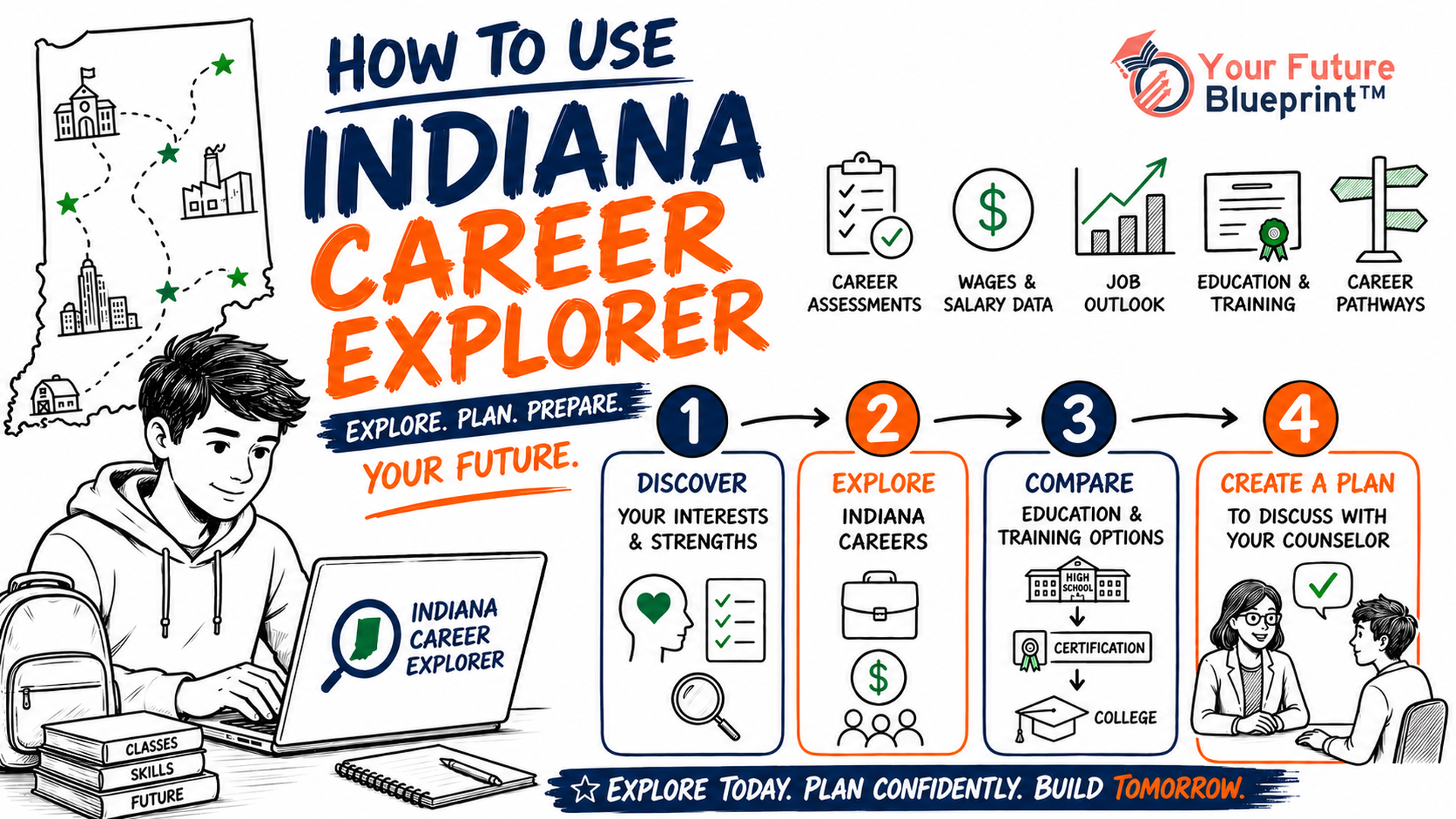
- Does the school use Indiana Career Explorer, Naviance, Xello, or another planning platform?
- Who can help me compare employment, college, training, military, and service options?
Indiana’s approved planning resources can help students explore careers, develop graduation plans, and review postsecondary options. The Indiana Department of Education lists Indiana Career Explorer as a free career exploration and graduation planning tool provided by the Indiana Department of Workforce Development.
What To Do If This Happens
You discover a missing graduation requirement
- Ask your counselor to identify the exact missing requirement.
- Confirm whether the issue involves credits, a specific course, pathway documentation, or a local school requirement.
- Ask which options are available, such as a schedule change, summer course, online course, credit recovery, approved alternative, or another pathway.
- Request deadlines and next steps in writing.
- Involve a parent, support adult, case manager, teacher, or administrator when appropriate.
You disagree with your graduation record
Bring any available records, including report cards, transcripts, transfer documents, course descriptions, or emails.
Ask:
“Could we compare my records with the school’s graduation report and identify where the difference is coming from?”
Remain calm and focus on the specific record that needs to be reviewed. Your counselor may need time to speak with a registrar, teacher, administrator, or previous school.
A required course is unavailable
Ask whether the school offers:
- Another approved course
- An online or summer option
- A course through another school or program
- An approved substitution
- A schedule adjustment
- A different graduation or readiness option
Do not enroll in an outside course until the school confirms that it will satisfy the intended requirement.
You are nervous about asking for help
Write your concern in an email or on paper. You can begin with:
“I am worried that I may be missing something in my graduation plan. Could we review it together?”
You can also ask a trusted teacher, parent, guardian, support adult, or school staff member to help you prepare for the meeting.
Your plans change late in high school
Ask your counselor to separate what is required for graduation from what may be recommended for a particular college, career, credential, or training program.
Changing direction may require adjustments, but it does not mean that you have failed. Focus on what is still possible and which steps are most important now.
You need support beyond academic planning
Tell your counselor enough to explain that you need assistance. Depending on the situation, they may connect you with a school social worker, psychologist, administrator, nurse, teacher, community organization, or another qualified professional.
For an immediate safety or medical emergency, contact emergency services or a trusted adult rather than waiting for a routine counselor appointment.
What To Watch For
Incomplete assumptions
Do not assume that a class, test score, job, volunteer activity, credential, or extracurricular activity fulfills a graduation requirement simply because it sounds related.
Missing documentation
Some experiences may require verification. Ask what documentation is needed and who is responsible for submitting it.
College requirements versus graduation requirements
Meeting high school graduation requirements does not automatically mean that you have met every admission or program prerequisite for a college, apprenticeship, military path, or training program.
Local differences
Indiana establishes state requirements, but schools may have different scheduling procedures, available courses, program options, and local expectations.
Outdated information
Graduation policies and implementation guidance can change. Use current school records and official state resources rather than relying only on an older handout, video, social media post, or information from another school.
What To Do Next
- Write down your expected graduation year.
- Request your current transcript or graduation progress report.
- List the courses and requirements you believe you have completed.
- Identify your main questions or concerns.
- Schedule a counselor meeting before course selection or before the issue becomes urgent.
- Ask which diploma system and requirements apply to you.
- Write down the agreed next steps, deadlines, and people you need to contact.
- Schedule another check-in if your plan changes.
Official / Trusted Links
Indiana Department of Education — Diploma Requirements
Use this page to review Indiana’s current diploma designations, course requirements, and related guidance.
Indiana Department of Education — Graduation Pathways
Use this page to review Graduation Pathways requirements and state guidance.
Indiana Department of Education — Redesigning the Indiana Diploma
Use this page for current information and implementation resources related to the new Indiana Diploma.
Indiana Department of Education — College and Career Navigation
Use this page to explore Indiana-approved college, career, and graduation planning resources.
Learn More Indiana — Materials Library
Use this resource hub to locate graduation planning materials and other Indiana student resources.
Indiana Department of Education — School Counseling and Guidance
Use this page to review state school counseling, student support, and wellness resources.
Related Your Future Blueprint Resources
Your Future Blueprint™ resource: INDIANA PLANNING TRACK
Use this track for additional guidance on Indiana graduation planning, college and career exploration, and state-specific student resources.
Best Next Step
Schedule a short meeting with your school counselor and request a line-by-line review of your graduation progress.
Bring your expected graduation year, current transcript or progress report, planned courses, and three to five written questions. Before leaving, confirm your next action, deadline, and follow-up date.
Ready for the next step? Explore the recommended track for step-by-step guidance:
Counselor Share Note
Counselors may share this article as a general meeting-preparation resource for students and families. It encourages students to organize their questions, review their records, and understand that graduation requirements and local procedures may vary.
This resource supports, but does not replace, individualized guidance from the student’s school counselor and other appropriate school or program professionals.
Sources & References
Last Reviewed
July 18, 2026
Review cycle: Annual and whenever Indiana graduation requirements or diploma implementation guidance changes.
Disclaimer
This article provides general educational information and is not individualized academic, legal, financial, medical, or mental health advice. Graduation requirements, approved courses, assessments, pathway options, readiness seals, and local school procedures may vary by graduating class, school, and individual circumstances.
Confirm final decisions with your school counselor and the appropriate school, college, program, financial aid office, government agency, or qualified professional.
View Transcript

This transcript reflects the original video content. Some Indiana graduation details may have changed since recording. Please use the reviewed article and official links above for current guidance.
Your Counselor: Your School Navigator
Your school counselor is your secret weapon—your personal coach for high school. While counselors help with scheduling, they are so much more. They can guide you through academics, graduation planning, college, careers, and even personal support.
Counselors are also busy. Learning how to talk with them effectively is an important part of getting the help you need.
Why Talk to Your Counselor?
Beyond helping you select classes, your counselor can assist with your Indiana graduation plan. You need the right courses, along with applicable tests and Graduation Pathways requirements, to earn your diploma.
Counselors may also connect you with Indiana college programs, local career and technical education opportunities, and state scholarship resources. Planning early can help you understand your choices and stay prepared.
When to Talk to Your Counselor
Talk with your counselor before choosing classes for the next school year.
Reach out if you are considering a different major, college, career, or training path.
Do not wait for a small issue to become a major problem.
When you begin applying to college, your counselor can help explain procedures for transcripts, recommendation letters, and other school documents.
A quick five-minute check-in can be more useful than waiting until you need an hour-long emergency meeting.
How to Talk to Your Counselor: Be Prepared
Counselors may be responsible for helping many students. To make your meeting productive and respect their time, prepare in advance.
First, schedule your meeting by following your school’s process. Your school may use a sign-up sheet, online system, email, or another procedure.
Second, know why you are there. Have a specific question or subject in mind. If you feel nervous, write down what you want to say.
Third, bring what you need. This could include your grades, a list of questions, useful websites, deadlines, or ideas you want to discuss.
Finally, be honest. Your counselor can provide more useful support when they understand the real situation.
Preparation helps your counselor help you more efficiently.
Your Counselor Can Help With
Your counselor may be equipped to help with a wide range of subjects.
High school course selection
Your counselor can help you choose classes that support graduation and prepare you for college, training, or a career.
Standardized tests
Your counselor can explain when students commonly take the SAT or ACT, how scores are sent, and which current school or college policies may apply.
College applications
Counselors may help with transcripts, recommendation letters, school reports, essays, and application procedures.
Financial aid and scholarships
Your counselor may direct you to FAFSA information and local, state, or institutional scholarship resources.
Social and emotional support
Counselors can support students who are dealing with stress, anxiety, personal problems, or other challenges. They may also connect students with additional qualified support.
Career exploration
Your counselor can help you explore vocational programs, career and technical education, apprenticeships, military options, college programs, and workforce opportunities.
Team Up for Your Future
Your school counselor is an important part of your success team. By learning how to communicate effectively, you take a more active role in your high school experience and prepare for your next step.
Your counselor wants to help, and your preparation can make that help more effective. Use this direct line of communication and make the most of this important school resource.
Your school counselors and teachers are there to guide you. If you want additional planning tools, Fast Track Scholar can help you stay one smart step ahead.