Talking to Professors and Asking for Help: A College Success Skill Too Many Students Ignore
Quick Answer
Professors, office hours, tutoring centers, and academic support services are valuable college resources. Students who ask questions early and communicate proactively often gain a better understanding of course material, stronger academic support, and greater confidence throughout college.
Key Takeaways
- Professors are an important part of your college support network.
- Office hours exist specifically to help students.
- Asking questions early can prevent larger academic problems later.
- Professional communication skills matter in college and beyond.
- Campus support services can help before challenges become overwhelming.
Who This Is For
Students: Learn practical ways to communicate with professors and access support before small problems become larger ones.
Parents: Understand how faculty relationships can support student success and confidence.
Counselors: Share strategies that encourage healthy self-advocacy and college engagement.
Why This Matters
College can feel very different from high school. Classes may be larger, expectations may be higher, and students often have greater responsibility for managing their own learning.
One of the most overlooked college success skills is learning how to communicate with professors.
Many students spend months in a course without ever introducing themselves, asking questions, or attending office hours. While that may feel easier in the moment, it can mean missing opportunities for clarification, support, and connection.
The Conversation Many Students Avoid
Imagine walking into your first college lecture.
The room is larger than most high school classrooms. Students fill row after row of seats. The professor stands at the front discussing a subject they've likely spent years studying.
It's easy to look around and think:
"They probably don't know who I am."
"They're too busy."
"I'll figure it out myself."
Many students have those thoughts.
The problem is that waiting too long to ask for help can make college harder than it needs to be.
One of the biggest differences between high school and college is that students are often expected to take the first step. Professors may not automatically check in when a student misses an assignment or struggles with a difficult topic. That doesn't mean they don't care. It simply means students are expected to reach out when they need support.
The students who do this early often discover something surprising: most professors genuinely want to help.
Why Talking to Professors Matters
At first, professors may seem intimidating. Some teach large lecture courses with hundreds of students. Others may have impressive credentials or extensive research experience.
However, most professors are not expecting perfection. They are educators who want students to learn and grow.
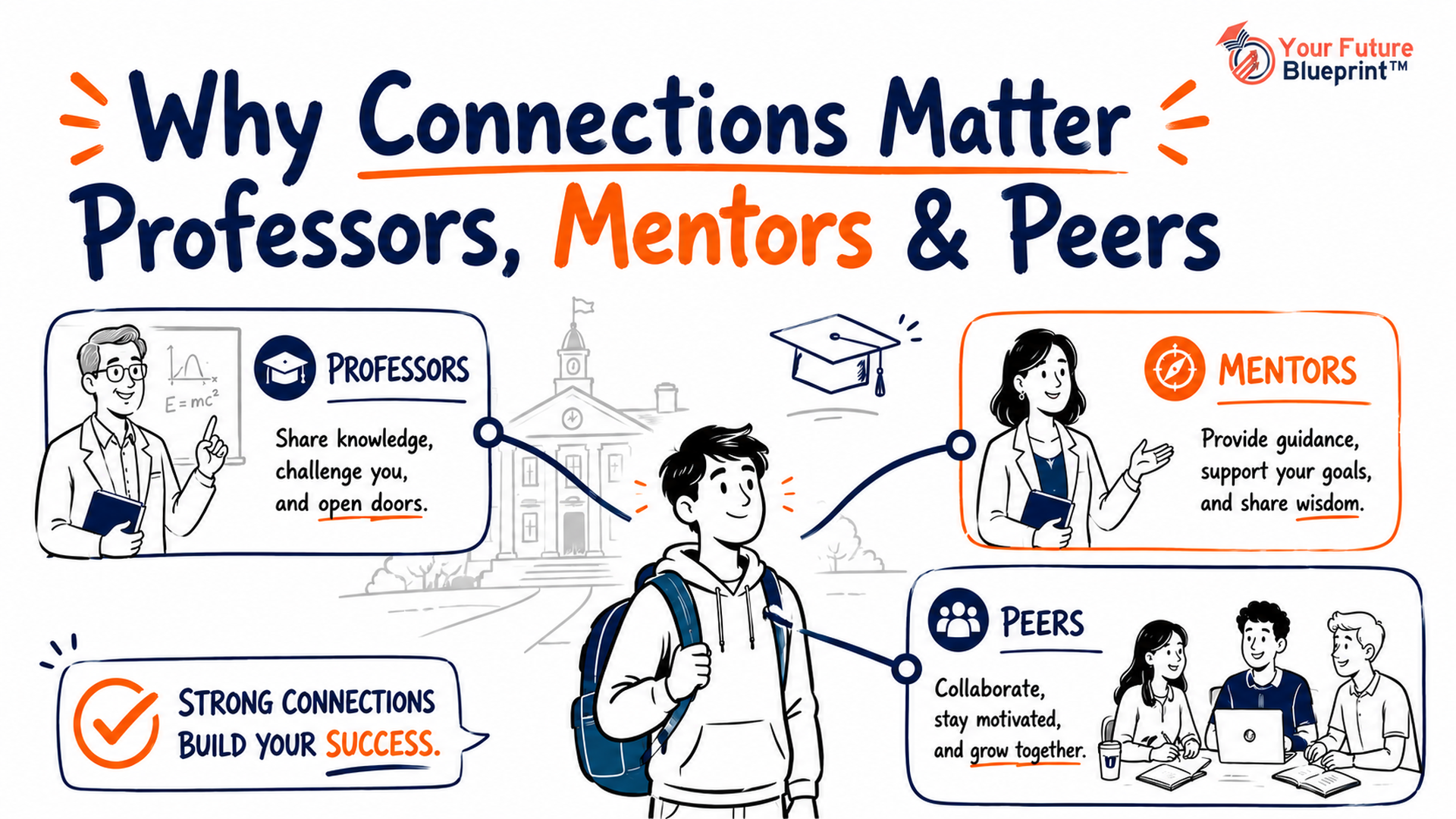
Building even a simple professional relationship with a professor can make college feel more manageable. Instead of viewing professors as distant authority figures, students can benefit from seeing them as educational partners who can help them navigate challenges and opportunities.
The Academic Advantage of Asking Questions
Asking questions is one of the most effective ways to improve learning.
When students seek clarification about difficult concepts, review confusing material, or discuss assignments, they gain a stronger understanding of course content. These conversations can prevent misunderstandings from becoming larger academic problems later in the semester.
Simple engagement strategies can help, including:
- Asking questions during class when appropriate
- Participating in discussions
- Taking organized notes
- Sitting where you can focus effectively
- Following up on confusing concepts
Research on student engagement has consistently found positive connections between faculty interaction and student learning experiences.
Open Doors Beyond the Classroom
Strong relationships with professors can create opportunities that extend far beyond a single course.
Faculty members may help students:
- Discover research opportunities
- Learn about internships
- Explore career options
- Identify graduate school pathways
- Obtain recommendation letters
Many professors also notice when students begin struggling academically. Early conversations can often help students address challenges before they become major obstacles.
While no relationship guarantees future opportunities, positive faculty connections can become valuable parts of a student's professional network.
The Value of Office Hours
Office hours exist specifically for students.
Yet many students never attend because they believe they need a major problem before showing up.
In reality, office hours can be useful for:
- Reviewing course concepts
- Discussing assignments
- Preparing for exams
- Exploring project ideas
- Seeking feedback on essays or presentations
- Learning effective study strategies
Students do not need a perfect question to attend office hours. Even a simple conversation about course material can help build familiarity and confidence.
Think of office hours as dedicated support time already built into your tuition and educational experience.
Make Your Message Count
Email communication is an important professional skill in college.
When contacting a professor:
- Use a clear subject line
- Include your full name
- Identify the course if necessary
- Explain your question directly
- Be respectful and concise
- Suggest available meeting times when appropriate
If a conversation requires significant discussion, email can be an excellent way to schedule an office-hours meeting rather than trying to resolve everything through multiple messages.
Don't Wait Until You're Overwhelmed
One of the biggest mistakes students make is waiting too long to seek help.
If you find yourself struggling with coursework, take action early.
Most colleges provide additional support services such as:
- Tutoring centers
- Writing centers and writing labs
- Math help centers
- Academic coaching programs
- Study skills support
These resources exist because colleges understand that students learn differently and sometimes need additional guidance.
Using support services is not a sign that something is wrong. It is a sign that a student is actively investing in their success.
Asking for Help Is a Strength
Many students worry that asking questions will make them appear unprepared or less capable.
The opposite is often true.
Seeking help demonstrates:
- Responsibility
- Initiative
- Self-awareness
- Commitment to learning
- Academic maturity
Successful students are not necessarily the students who never encounter challenges. Often, they are the students who know how to use available resources when challenges arise.
Build Your Network, Secure Your Future
College success is not only about completing assignments and earning grades.
It is also about building relationships, learning how to communicate professionally, and developing a support network.
Professors, tutors, academic coaches, advisors, counselors, and other campus professionals can all become valuable members of that network.
Students who engage with these resources often feel more connected, more confident, and better prepared to navigate college life.
Official / Trusted Links
Best Next Step
Choose one current course and identify your professor's next office hours. Write down one question, assignment concern, or concept you would like clarified and make a plan to attend. Taking one small step now can make future conversations easier.
Ready for the next step? Explore the recommended track for step-by-step guidance:
Counselor Share Note
Counselors are encouraged to share this resource with students and families as part of college readiness and self-advocacy discussions. Students should continue working directly with professors, academic advisors, school counselors, and campus support professionals when making academic decisions.
Sources & References
Last Reviewed
June 2026
Disclaimer
This content is for general educational purposes only and does not constitute financial, legal, tax, academic advising, mental health, or professional advice. Students and families should consult with professors, academic advisors, school counselors, college representatives, tutoring services, or other qualified professionals before making important educational decisions.
View Transcript

Talking to Professors & Asking for Help
Walking into a college lecture hall, your professor may seem intimidating, especially in a large class. It can feel difficult to approach someone who appears to be an expert in their field. Parents may also wonder whether their student will reach out when help is needed.
Connecting with professors is one of the smartest decisions students can make during college.
Professors are not only there to deliver lectures. Asking questions in class or attending office hours can help clarify difficult concepts, improve understanding, and strengthen academic performance.
Even simple actions such as sitting where you can focus well, participating in class discussions, and engaging with course material can create a stronger learning experience.
Professors can also become mentors. Building relationships may lead to research opportunities, internships, career guidance, graduate school recommendations, and professional references.
Office hours provide dedicated time for students. Most students never take advantage of them, which means professors often have more time available for meaningful conversations. Arriving with specific questions or topics can make office hours even more productive.
When emailing professors, students should communicate clearly and professionally. Use a clear subject line, include identifying information when appropriate, explain the question directly, and suggest available meeting times if a conversation is needed.
Students should not wait until they are struggling significantly before seeking help. Colleges offer many support resources, including tutoring centers, writing labs, math support services, and academic coaching programs.
Asking for help is not a sign of weakness. It demonstrates maturity, responsibility, and commitment to learning.
Building strong relationships with professors and utilizing academic support services can contribute to both academic success and long-term professional growth. By staying proactive and engaged, students can create a stronger support network throughout college.