Related Blogs
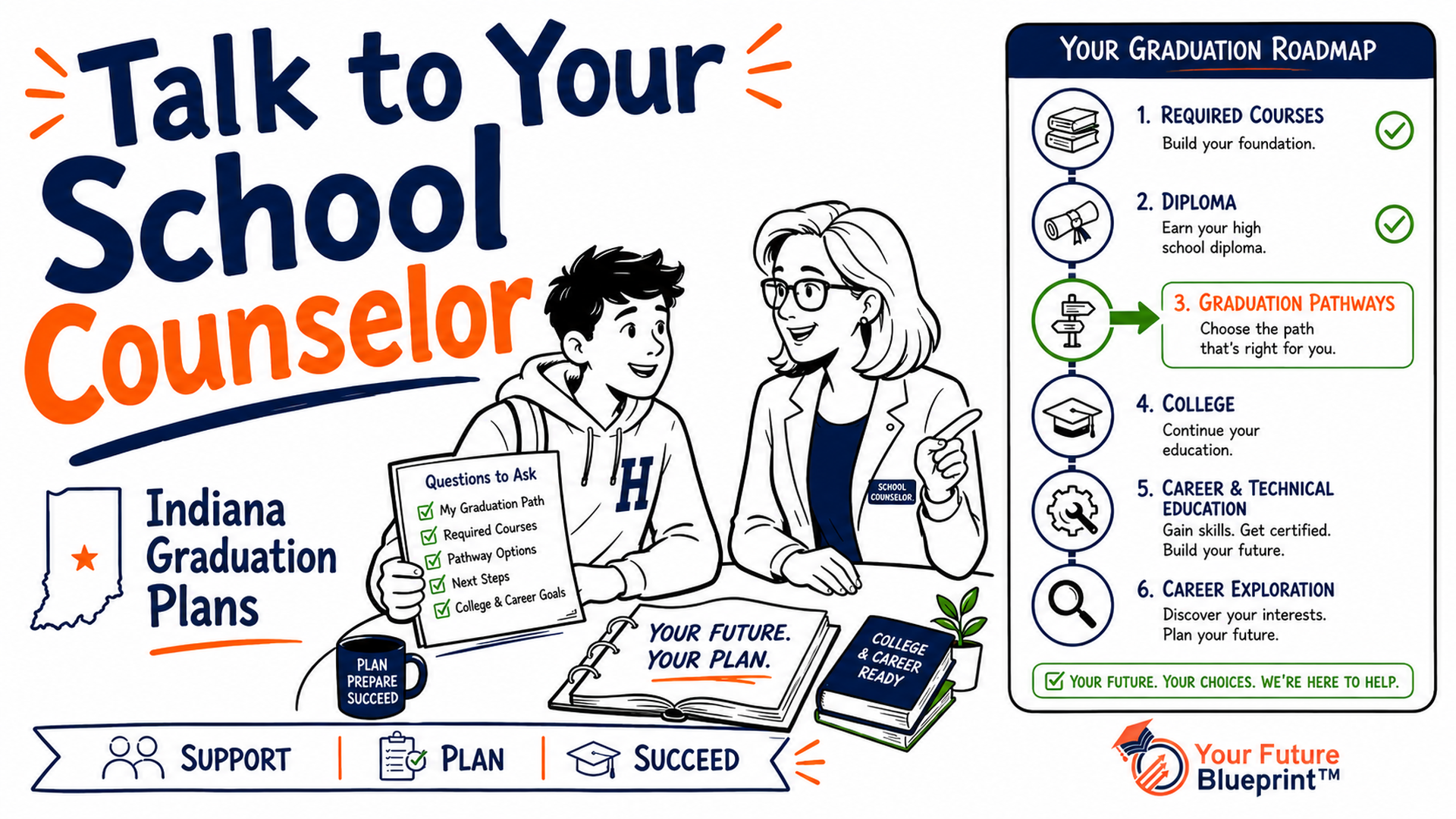
Indiana Graduation Pathways: What Students Need to Graduate
Indiana students need more than credits to graduate. Learn how Graduation Pathways work, what students need to complete, and why checking with a school counselor matters.
For many Indiana students, it can affect total cost, debt, career timing, scholarship planning, and confidence.
The goal is not to pressure students into rushing. The goal is to help students build a clear plan early, use the support already available, and make fewer avoidable mistakes along the way.
Real Guidance. No Guesswork.
Reviewed for: 2025–2026 college planning guidance
Last reviewed: May 2026 | Review type: Data-sensitive
What changed in this update:
The video references an estimated extra-year cost of $28,000 or more based on earlier College Board data.
Current College Board 2025 data lists the average 2025–2026 estimated budget for in-state, on-campus students at public four-year institutions at $30,990.
The article below keeps the video's core message but reflects updated cost context and current official resource links.
Important: College costs, scholarship rules, credit-transfer policies, degree requirements, and program eligibility can change. Students and families should verify time-sensitive details with the college, academic advisor, financial aid office, and official Indiana or federal sources before making final decisions.
Indiana students who want to graduate college in four years usually need more than good intentions. They need a clear degree plan, regular advising, the right credit load, and a strategy for using high school credits, summer classes, tutoring, and campus support when needed.
For many bachelor’s degree programs, 12 credits may count as full-time for financial aid purposes, but it often is not enough to finish a 120-credit degree in four years. A common planning target is 15 credits per semester or about 30 credits per academic year, but students should confirm what is realistic and appropriate for their program.
An extra year of college can be expensive.
It may include more tuition and fees, more housing or commuting costs, more books and supplies, and more time before the student begins full-time work. College Board's 2025 Trends in College Pricing and Student Aid report lists the average 2025–2026 estimated budget for in-state, on-campus students at public four-year institutions at $30,990.
That does not mean every Indiana student will pay that amount. Actual costs vary by college, housing choice, financial aid, scholarships, family situation, and program. But the larger point still stands: extra semesters can add real financial pressure.
There is also an opportunity cost. A student who graduates later may delay full-time earnings, job experience, graduate school, military advancement, apprenticeship progression, or other next steps. That does not mean every student must follow the same timeline. Some students need to adjust for health, work, family responsibilities, finances, or academic fit. But when delays are preventable, planning ahead matters.
A four-year plan is a guide, not a promise.
Some students change direction for good reasons. Some majors have strict course sequences. Some students need to work part time or reduce their course load for health, family, or financial reasons. Some transfer students need extra planning to make credits fit correctly.
The point is to avoid preventable delays.
A strong plan helps students know:
Every student should know the basic structure of their degree.
That includes general education requirements, major requirements, electives, prerequisites, minimum grades, GPA requirements, internship or clinical requirements, and any admission checkpoints within the major.
A student should ask:
This is where academic advisors matter.
Students should meet with an advisor early, not only when something goes wrong. Advisors can help students understand course sequencing, degree audits, transfer credits, major changes, and graduation requirements. Students should still take responsibility for reading their degree plan, but they should not try to figure it out alone.
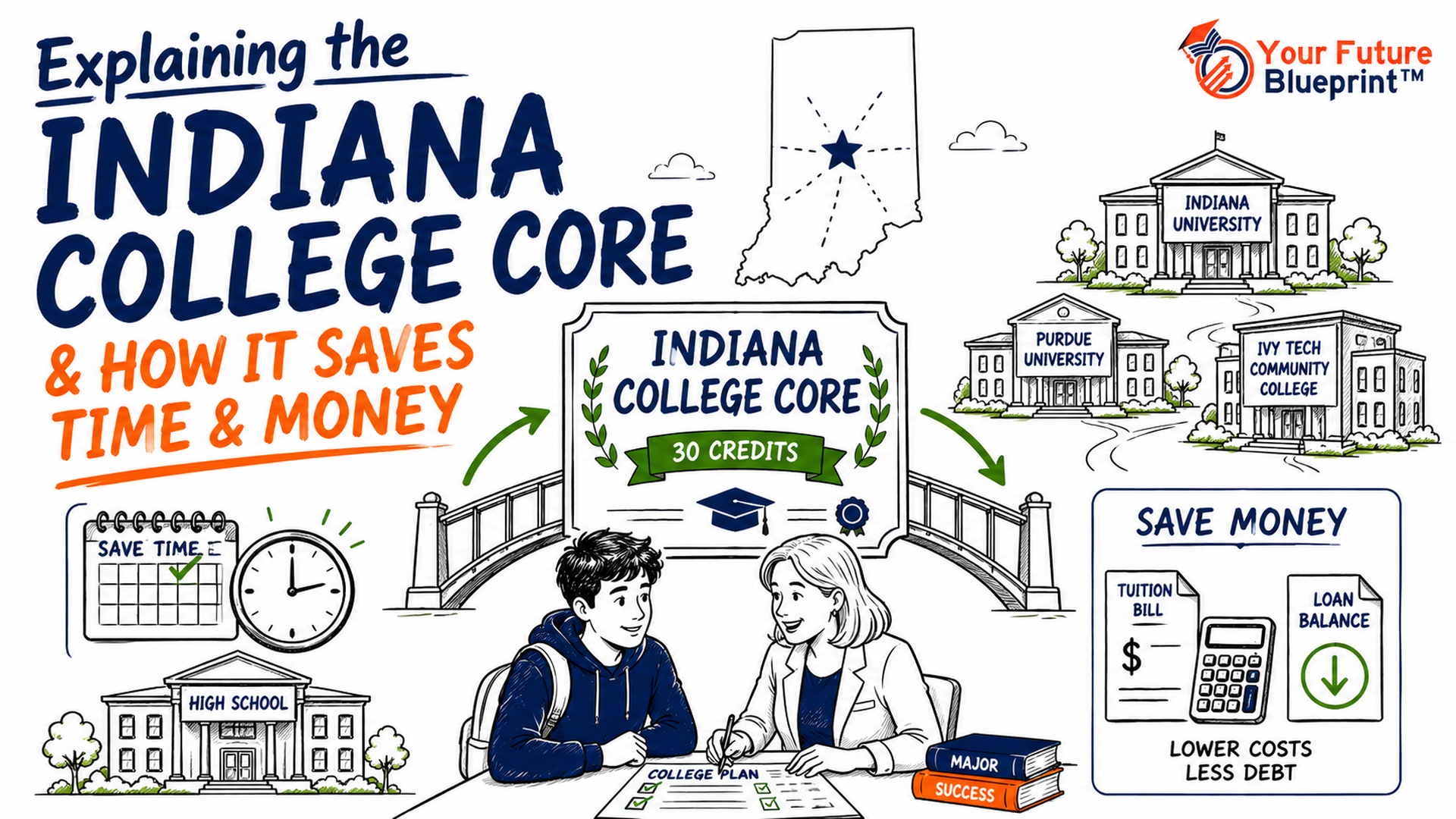
The Indiana College Core can be helpful for students who complete it in high school or through eligible college coursework. Indiana’s official transfer site describes the Indiana College Core as a block of 30 credit hours of general education, college-level coursework that is guaranteed to transfer among Indiana public colleges and universities.
That is valuable, but students should still ask how those credits apply to their specific degree.
A credit can transfer and still not shorten the path to a particular major if it does not fit the program requirements. For example, a student entering engineering, nursing, education, business, technology, or a selective program may need specific math, science, lab, or prerequisite courses.
Before assuming a credit saves time, students should confirm:
A smart credit plan starts before college, but it should be checked again after enrollment.
Many students hear that 12 credits is full-time. That can be true for certain financial aid and enrollment definitions. But for a 120-credit bachelor's degree, 12 credits per semester usually does not equal four-year completion.
A simple example:
That is why many college completion efforts encourage students to think in terms of 15 credits per semester or 30 credits per year. Complete College America’s “15 to Finish / Stay on Track” strategy focuses on helping students complete degrees faster, reduce costs, and build academic momentum.
This does not mean every student should automatically take 15 credits every semester. Course difficulty, work hours, health, family responsibilities, major requirements, and academic readiness all matter.
A better question is:
"What is my realistic 30-credit-per-year plan?"
That plan might include:
The safest plan is one built with an advisor, not one based on a guess.
Before registration opens, review your degree audit with an academic advisor. Confirm that each class counts toward your program, that prerequisites are in order, and that your credit plan still supports your graduation timeline.
Most graduation delays do not happen all at once. They often build from small decisions that do not seem serious at the time.
Changing a major can be the right choice. It is better to change direction than stay in a program that is clearly wrong for the student. But students should ask what the change does to their timeline.
Before changing majors, ask:
One failed or withdrawn class can affect more than one semester if it is a prerequisite. This is especially true in majors with sequenced courses, labs, clinicals, studios, internships, or cohort-based programs.
If a student is struggling, the best time to act is before the withdrawal deadline or final exam period.
Good steps include:
Students sometimes take courses that are interesting but do not move them toward graduation. Electives can be valuable, but they should fit inside the degree plan.
Before registering, students should check:
Tutoring centers, writing centers, advising offices, financial aid offices, career centers, accessibility services, counseling services, and faculty office hours exist for a reason.
Students do not need to wait until they are failing to use them.
Using support early is not a sign that a student is behind. It is one of the habits that helps students stay on track.
Indiana students have several tools and programs that may support planning.
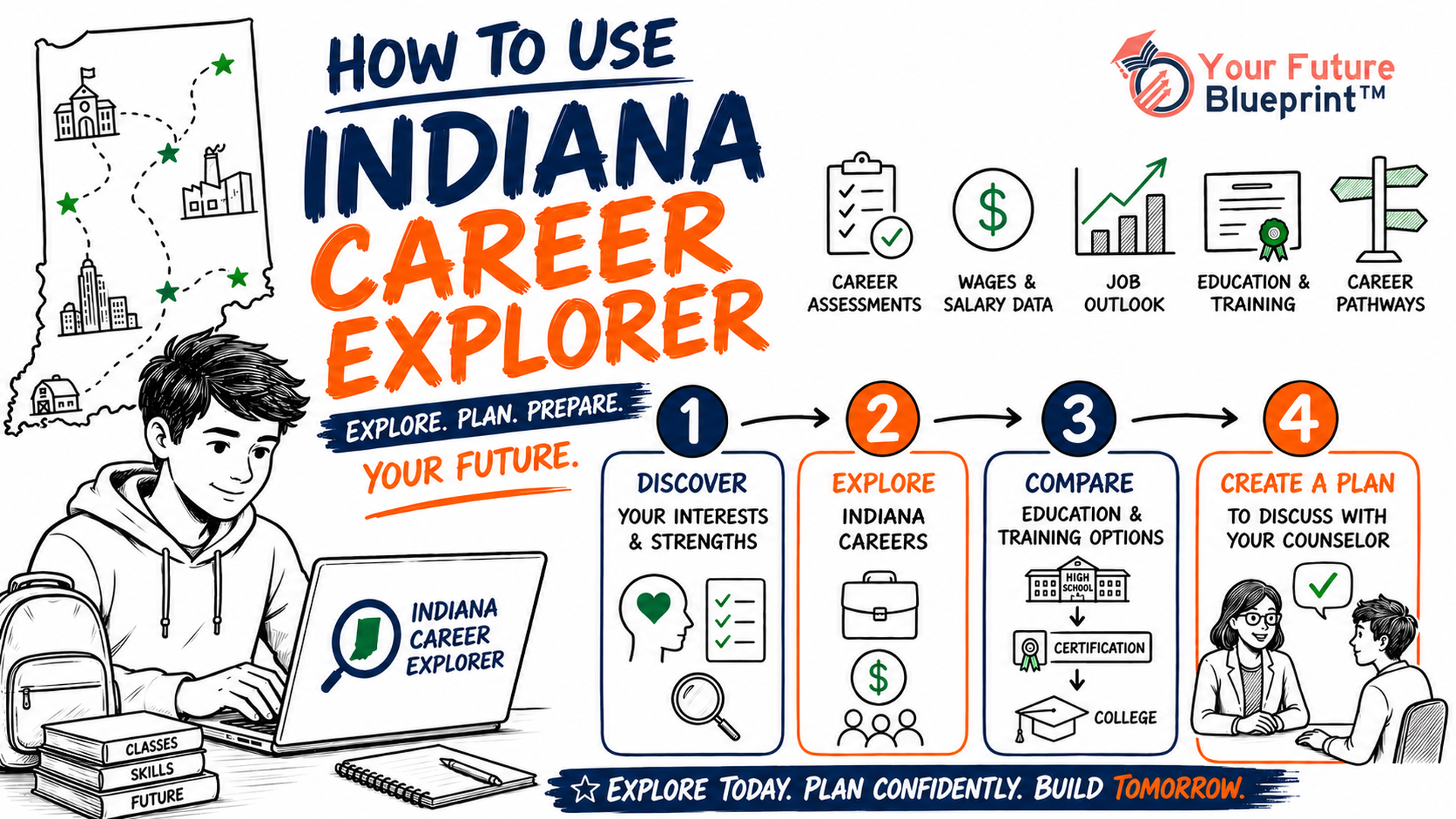
Indiana Career Explorer is described by the Indiana Department of Workforce Development as a free career and education planning tool that helps students explore interests, work values, industries, careers, and goals.
Students can use it to connect career interests with majors and programs before making major changes.
The Indiana College Core can help students complete a transferable block of general education coursework when it fits their plan. Students should still confirm how credits apply to their specific college and major.
Learn More Indiana describes the 21st Century Scholarship as an Indiana program that can help eligible students afford college, including up to 100% tuition at public Indiana colleges for eligible students. Students must still meet program requirements and should verify details through official program guidance.
Each college has its own systems. Students should learn how to use:
The best support is the support used early.
Graduating in four years is not only a course-registration issue. It is also a habits issue.
Students are more likely to stay on track when they build routines around sleep, studying, class attendance, exercise, relationships, and asking for help. Health and mental health should not be treated as side issues. They affect focus, persistence, decision-making, and academic performance.
A practical weekly rhythm might include:
Do not guess your way forward. Meet with your advisor and ask for a written plan that shows how to recover credits. Summer courses, winter courses, adjusted semester loads, or applied transfer credits may help, but each option should be checked for cost, financial aid, and degree fit.
Ask whether the class is required for your major and whether it is a prerequisite. Then ask when it is offered again. Also check whether the grade or withdrawal affects scholarships, satisfactory academic progress, athletic eligibility, program admission, or financial aid.
Meet with an advisor in both the current and possible new major if possible. Ask for a side-by-side credit comparison before making the change. A major change may still be the right decision, but students should understand the timeline and cost impact.
Talk with the financial aid office, academic advisor, and a trusted campus support office. Ask about aid, emergency grants, work-study, payment plans, lower-cost course options, summer aid, community college transfer options, and whether part-time enrollment changes scholarship or aid eligibility.
Talk with someone early. That may be a counselor, advisor, faculty member, resident assistant, student support office, healthcare professional, parent, mentor, or another trusted adult. Staying on track matters, but health and safety come first.
Related training track: https://train.yourfutureblueprint.com/course/view.php?id=14
Before the next registration period, students should open their degree audit, list the courses they plan to take, and meet with an academic advisor to confirm that each course counts toward graduation.
Your school counselors, teachers, college advisors, financial aid offices, and trusted mentors are a great place to start. If you want extra tools to stay organized, Your Future Blueprint can help you keep moving forward.
This article is designed to be shared with students and families as a general educational resource. Families should still confirm details with school counselors, academic advisors, financial aid offices, college representatives, school administrators, or official program representatives.
May 2026
Disclaimer
This content is for general educational purposes only and does not constitute financial, legal, tax, academic advising, career advising, mental health, or professional advice. Students and families should consult with school counselors, academic advisors, financial aid offices, college representatives, school administrators, official agencies, healthcare professionals, or trusted advisors before making final decisions.
No personal student information is collected or stored when accessing free content through verified K–12 school platforms. Any optional tools that collect user-provided information should be reviewed with the platform’s Privacy Policy and Terms of Use.

Transcript note: This transcript reflects the original video content. Some details may have changed since recording. Please use the reviewed article and official links above for current guidance.
How to Graduate in 4 Years: Tips for Indiana College Students
You are an Indiana student planning for college. Your goal is graduating in four years.
While that may feel like the natural plan, many students stretch college to five or six years. But with the right strategy, you can improve your chances of staying on track.
This video explains why the four-year mark matters, especially for Indiana students, and how students can plan for it.
Why it matters: real costs and benefits
An extra year of college is not just one more year of classes.
It can mean higher costs and potentially more debt. That may include additional expenses for living, tuition, books, and fees. For Indiana public universities, this could easily be $28,000 per year or more.
It can also mean losing a year of potential earnings from your first job, which could be another $40,000 to $60,000 in Indiana.
That is a major financial impact.
Graduating on time can mean less debt, earlier career momentum, and a faster launch into independence.
Plan from day one
To finish in four years, you need a blueprint.
Understand every course and credit required for your major. Make sure your high school credits, such as those from the Indiana College Core, translate correctly.
Work closely with your academic advisor at your Indiana college from your first semester to map out your full degree plan.
Your advisor is key to navigating specific course sequencing and making sure required classes are available when you need them.
Maintain momentum
Take 15 credits every semester when it is appropriate for your plan.
Taking only 12 credits, which is a common misunderstanding of “full-time,” means it will mathematically take longer to earn a four-year degree in many programs.
Use Advanced Placement or dual credit coursework from high school when it applies to your degree.
Consider summer sessions or winter intersession strategically to catch up or get ahead.
Avoid common traps
Watch out for common pitfalls that can extend graduation.
Changing your major too many times or too late can add a full year or more.
Academic struggles, such as failing or withdrawing from classes, may require retaking courses, which can cost time and money.
Not seeing your advisor regularly, or missing specific requirements for your Indiana degree or major, can also delay your path.
Leverage your Hoosier support
Indiana offers specific resources to help students graduate efficiently.
Indiana Career Explorer is an online tool students can use to explore careers and majors so their path is better aligned.
If you are a 21st Century Scholar, your college may have dedicated staff to help you fulfill your pledge and stay on track.
Most Indiana public colleges also have advisors, tutoring centers, and degree audit systems designed to support student success.
These resources are designed to help students keep moving forward.
Build healthy habits
Finishing in four years is a marathon.
Maintain your physical and mental health. Get enough sleep, eat well, and exercise.
Build a strong support system of friends and faculty.
Manage your social life in a way that complements your studies instead of derailing them.
These habits are important for staying focused and on track.
Control your journey
Your college timeline is something you can influence.
With careful planning, proactive strategies, and smarter choices, you can work toward completing your degree in four years and launching into your future.
And if plans shift, there are still smart ways to stay on track.
That is a meaningful step toward financial freedom and career momentum right here in Indiana.
Your school counselors and teachers are always here to guide you. And if you want extra tools, Fast Track Scholar can help you stay one smart step ahead.
Disclaimer
This content is for educational purposes only and does not constitute financial, legal, or professional advice.
Students and families should consult with school counselors, financial aid offices, or trusted advisors before making final decisions.
No personally identifiable student information is required to access free content. When students opt into platform features, they or their parent provide basic details for planning purposes, not school data.
Personal information provided by users on the Fast Track Scholar platform, such as for scholarship searches or planning tools, is stored securely and handled in accordance with the Privacy Policy and Terms of Use.

Every guide on YourFutureBlueprint undergoes a rigorous review process. We only cite primary data sources and local government reports.
Get weekly insights delivered to your inbox